“DIY Cultures and Bottom-Up Oral History Methods for Documenting Stories and the Collective Memory of the Displaced: Community Engagement and Refugee Archives.”
By Paul V. Dudman, Archivist at the UEL Archives.
The `Recording It Ourselves: DIY Cultures, Information, Archives and Histories conference (hashtag #RIO21) took place on Saturday, 20 March 2021 as a virtual event. The original plan for this to be an in-person conference was sadly not meant to be due to the ongoing COVID-19 pandemic. The aim of this event was a focus on DIY Cultures as they pertain to archives and cultural heritage. The event organisers defined DIY Culture as `grassroots and political cultures/practices’ which can incorporate `grassroot spaces, music and zine making, blogging, podcasting, housing co-ops, and activism etc.’ The conference website is available at https://recordingitourselves.wordpress.com/ and their Twitter handle for the event was @RecordOurselves.
The day-long event encompassed a number of important themes which were discussed during the course of the event, from issues of decolonising the archive to the use of DIY translation techniques for helping to celebrate multi-lingual histories; documenting Queer spaces in King’s Cross; the use of dilectograms to record a punk anarchist space in Belfast; DIY cultures supporting the subcultural scenes in Berlin; to the importance of copyright and data protection in oral history project design; and the role of The Gezi Archive (www.geziarchive.net) in creating a digital archive of dissent around the Gezi Park protests in Turkey.
My paper was entitled, “Bottom-Up Oral History Methods for Documenting Stories and the Collective Memory of the Displaced: Community Engagement and Refugee Archives.” The focus of this paper was on the use of bottom-oral history methodologies as a means of breaking the barriers associated with accessing historical/archival information on refugee and migration issues as well as the (dis)continuities that appear over time in migration accounts, policy-making, research and practice and the impacts these have on our work. My aim was to consider and reflect upon important discussions in relation to our own archival processes in relation to collecting (community) memories especially in relation to the interplay of power dynamics as to which communities and voices are present within the archive and which are under-represented. In responding to refugee crises, how can we as archivists actively engage in ethically documenting, preserving and making accessible reliable, accurate and trustworthy materials and collections which genuinely reflect the testimonies and life histories of refugees and asylum seekers.
For eighteen years the University of East London has been the home of the archives of the Refugee Council, perhaps the largest collections focusing on refugee and migration issues in the UK. In recent years, we have been undertaking multiple civic and community engagement and outreach projects on beyond the academy seeking to work with local communities, third sector organisations and especially with refugees and asylum seekers themselves. The paper began with an overview of the range and scope of our archival collections at the University of East London (UEL) Archives relating directly to issues of displacement and a brief history of the Refugee Council Archive as 2021 marks the seventieth anniversary of the both the Refugee Council and the United Nations Convention on the Status of Refugees.
Our work with the analogue physical collections of the Refugee Council Archive and related collections have raised a number of issues associated with how the narratives of the refugee experience are documented, preserved and subsequently made accessible for research. The UEL Archives have been home to the Archive of the Refugee Council for nearly two decades now. The collection itself dates from 1951 and the inception of the two organisations that were later to merge and form the Refugee Council, the British Council for Aid to Refugees and the Standing Conference on Refugees. The Archive itself constitutes a history of the Refugee Council as a third-sector organisation, documenting its working practices (e.g. minutes of meetings, correspondence, publicity, funding, internal research and reporting); combined with a special collection of grey literature encompassing research reports; conferences papers; press cuttings; magazines; and articles. Whilst our work continues to document, preserve and make accessible this important body of material documenting the history of refugee engagement in the UK, it is also been a growing need to ask the question, where are the actual voices of and testimonies of the refugees themselves? The testimonies, narratives and voices which have been left unheard even in an archive focused exclusively on documenting refugee and forced migration issues.
This paper considered the role that our Archives can play in relation to identity formation and collective memory. Archives can have a positive role to play in challenging the negative discourses on this issues within media and society; and can play a role in enabling refugees to have a voice in the social, legal and political empowerment of their communities? But we also need to consider issues of ethics, trust and representation and how we as Archivists use the materials entrusted to us, as archives can also be a nexus of power relations where voices and narratives can be either heard or silenced.
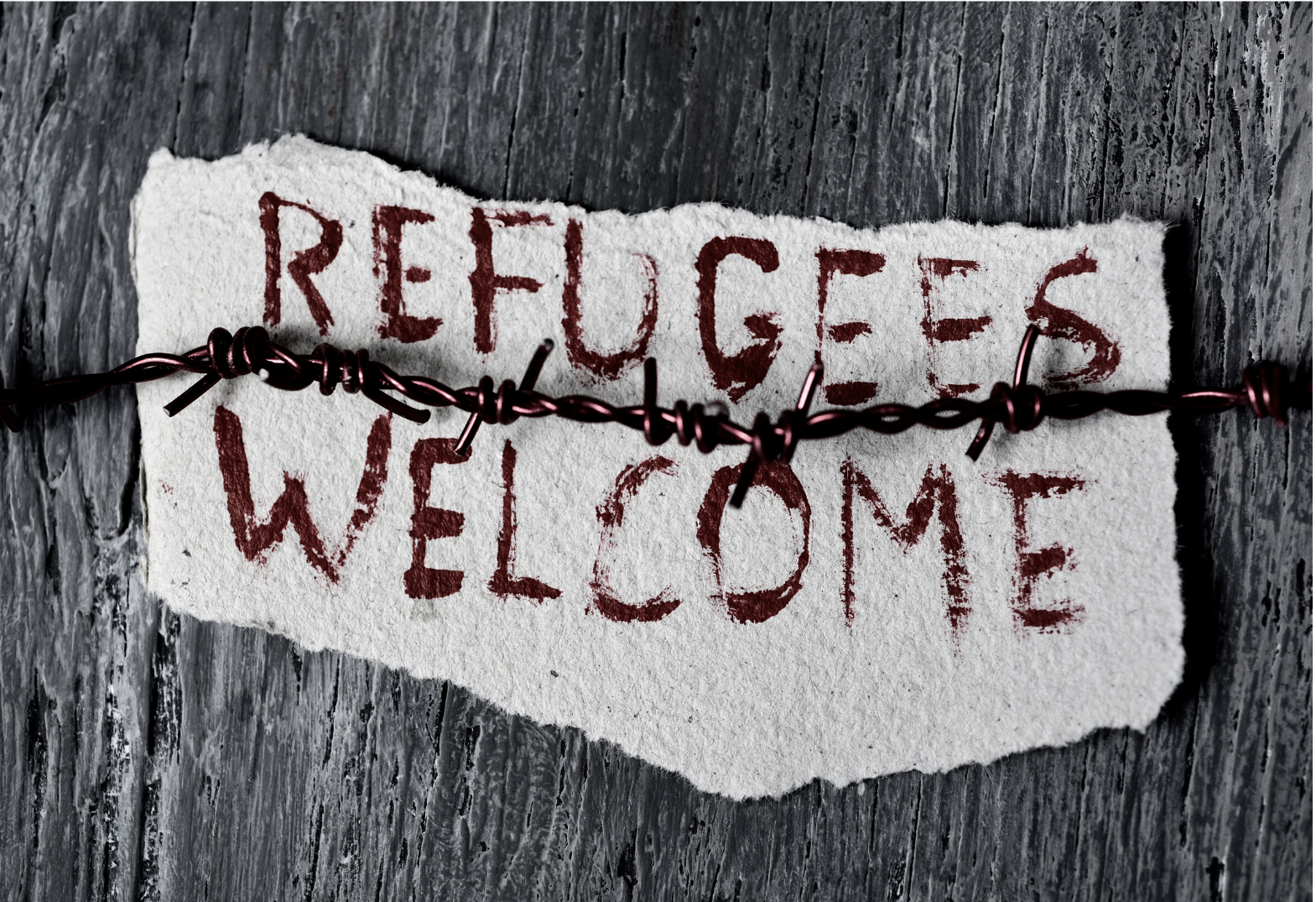
Archives are traditionally home to a multitude of interacting stories, narratives and testimonies. Some rise to the surface easily, others are hidden.
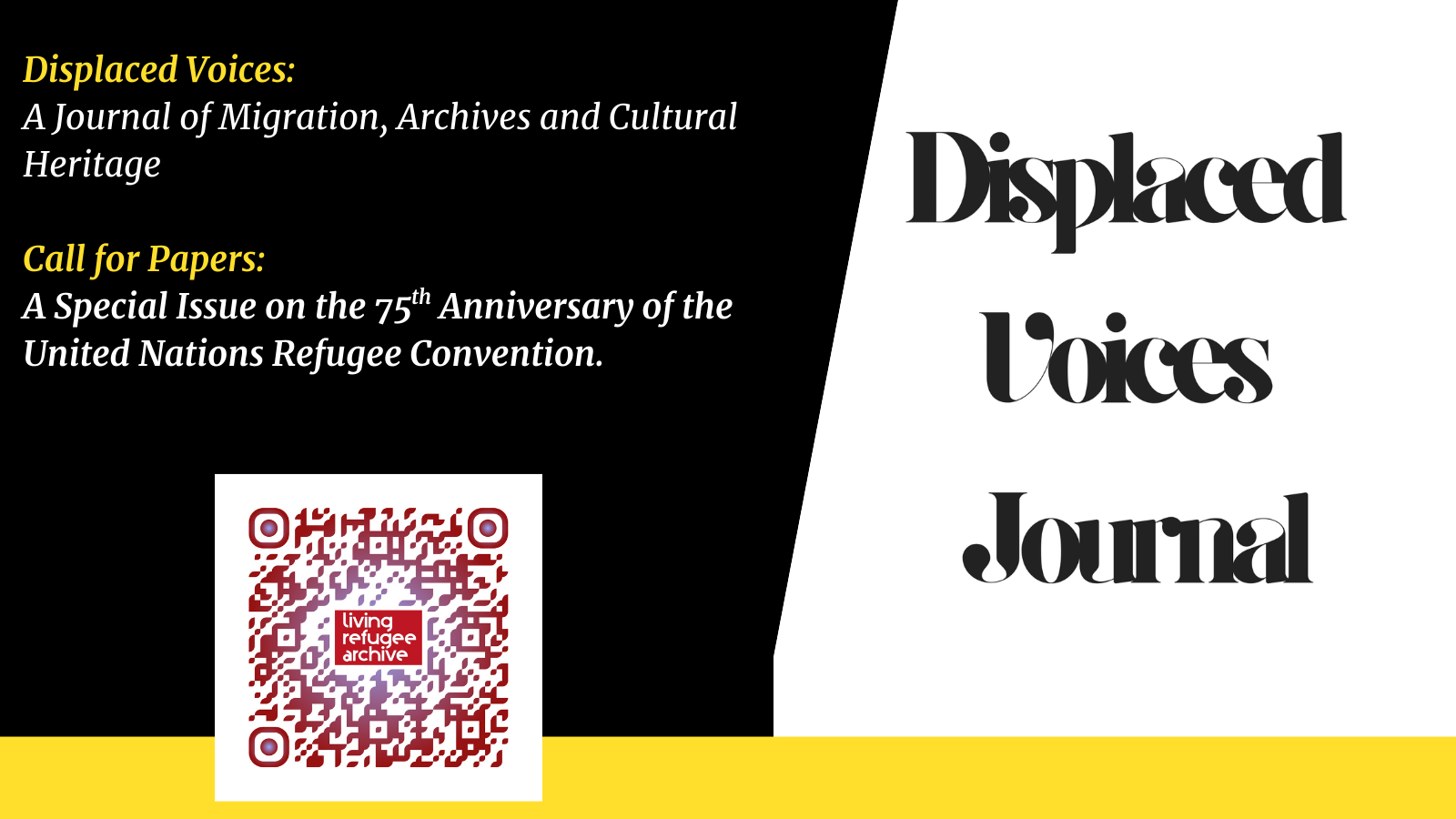
The paper also focused on our civic engagement and outreach projects focusing on documenting the lived experiences of refugees and asylum seekers in East London. Our project, Democratic Access or Privileged Exclusion: Civic Engagement through the Preservation of and Access to Refugee Archives, was a collaboration with Dr. Rumana Hashem and the Centre for Migration, Refugees and Belonging (CMRB) at UEL and enabled the collection of several oral history recordings and the creation of the Living Refugee Archive online portal. The project found that memories of refugees are ‘moving’, and digitalised oral history archives can be seen as ‘a project of human rights,’ whilst social history and powerful political narratives are situated, memories are situated, and ideas about memories and identities can be challenged through oral history recording of contested lived experience of refugees. Complete new social histories can be constructed with every single oral history that is undertaken.
Our civic engagement project focused on working with bottom-up oral history approaches towards exploring the “contradictory narratives of transcultural encounters of refugees and undocumented migrants in London” (Hashem and Dudman, 2016) and beyond. Bottom up oral history methodologies we felt were crucial to the success of this project as they incorporated pre-established oral history methodology and interview (semi-structured and qualitative), which enabled us to follow a critical anti-oppressive methodology, a bottom up approach to better balance power relations. This helped facilitate the decolonising of knowledge through participatory and co-productive practices which were dialogical, situated and reflexive, thereby producing ethically accountable knowledge.
This has laid the foundation for our ongoing work across our archival collections at UEL, focusing on issues of collaboration, Co-production in knowledge creation and the ethical representation of communities. This has enabled us to continue to explore new opportunities for collaboration; co-production and partnership working; putting community engagement at the heart of the work that we do. We have also been keen to explore Inter-disciplinary modes of collaboration across academic disciplines as archives are not just about history. We have now been able to work successfully across academic disciplinary lines including social sciences; graphic design; illustration; architecture; theatre studies; psychology; dance; Olympic history (BOA Archive) and local history (East London).
Representation is also key, being open to exploring new forms and approaches to documenting narratives for the archive and opening the archive to explore how archival narratives from our collections can be represented in different ways. This has helped facilitate us to be able to open up the Archive to life histories of vulnerable communities and to look at different ways of ensuring that minority voices are documented, preserved, made accessible and valorised within the Archival space. However, this does raise a number of key issues including: Engagement: how do we ensure that we are able to engender trust with communities and individuals to enable and facilitate life history work; considering issues of representation and how do communities and individuals want their story to represented within the Archive; maintain ethics and a duty of care in ensuring that any life history work undertaken is ethical in its approach, ensuring participants are informed of the process from initial engagement through life history process and ending up with archiving and issues of accessibility; and being aware of your own situated practices as the Archivist Researcher.
In conclusion I think it is important to consider multi-modal approaches to collecting life histories and to think holistically. Life histories are not just oral histories or written testimonies, they can be represented in other formats, e.g. theatre, dance, art, design, textiles and objects. Also, to be open to collaboration and be prepared to challenge hierarchies in support of projects that break the mode in terms of how often marginalised voices can be represented and showcased in new and different ways.
References
Hashem, R. and Dudman, P. V. (2016) ‘Paradoxical narratives of transcultural encounters of the “other”: Civic engagement with refugees and migrants in London’, Transnational Social Review, 6(1–2), pp. 192–199. doi: 10.1080/21931674.2016.1186376.