Living Refugee Archive Online Resource for ‘Lore and Ware’ Situated Practice Project
Introduction
Welcome to the Living Refugee Archive Online Resources section which we have created to support the ‘Lore and Ware’ Situated Practice Project at the Royal College of Arts (RCA). This online resource will act as an initial point of reference for the University of East London (UEL) Archivist Paul Dudman’s virtual seminar on Tuesday, 6th October 2020.
This page will act as an initial point of reference, introducing you to both the different archival collections held within at the University of East London Archives and within the Living Refugee Archive. It will also act to introduce you to some of the themes that Paul will be discussing during his talk and will also enable access to some digital archival materials that can be used as a springboard for your creative responses as part of this project.

Overview of the Living Refugee Archive: Life Histories and Humanity
I have entitled this section `Life Histories and Humanity’ to reflect on our work documenting the life histories of displacement. Archives by their very essence, represent a collection of stories, an assemblage of voices documented and preserved for posterity. Working with the Refugee Council Archive and our growing collection of archival collections on migration, that are collections focus on the living, documenting the life histories of individuals and communities in real time, creating a testimony of the present to be preserved for the future. Working with collections on refuge and displacement, this raises very important issues associated with representation of those whose stories we are documenting; the ethics of how we go about collecting, preserving and making these stories accessible; legal requirements (data protection and freedom of information); and wider issues associated with how our understanding of one another is informed by our own identities, memories and biographies.
We have therefore looked to develop and refine our own archival practices as a means to engeder trust in ourselves as an archival repository, whilst also looking to new establish new networks and collaborations, and explore ways of engagement beyond the University that can help document stories and narratives of displacement. One of the factors that have been key to the development of our Archives has been a growing awareness that whilst our established archival collections document charity and third-sector engagement with supporting refugees over a seventy-year period from the inception of the 1951 UN Refugee Charter to the present day, and the archive now contains in the region of 35,000 analogue items (e.g. minutes of meetings, correspondence, research reports, articles, magazines, conference papers, etc), there was very little that actually represented the voices of the displaced themselves.
Whilst there is a lot of historical evidence talking about refugee issues, there was very little that actually spoke to the first-hand life history testimonies of those who sought asylum, and how they adapted to life in the United Kingdom. What should be our role in documenting these individual and community histories?
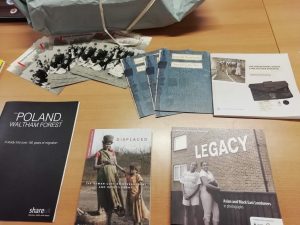
Where were these life history narratives and who should we go about collecting them? How could we ensure that potential interviewees would trust us enough to tell us their story, and how could we approach this work in an ethical and sustainable way? To help support our exploration of the various types of narrative and life-history work that our Archive contains, I have established seven collections of materials held within our archives; from oral histories to photographs; written testimonies to textiles; theatre posters to documenting an individual life experience to consider how each of these object types can contribute to documenting a particular narrative experience.
Archival Collections
For this project we will be utilising some of the digital archival collections that we have access to as part of the University of East London (UEL) Archives. We will be focusing primarily on some of our digital collections as regrettably, due to current Pandemic situation we are still working from home.
The UEL Archives hold a number of important archives, including:
- The Refugee Council Archive.
- The British Olympic Association Archive and Library.
- The Hackney Empire Theatre Archive.
- The University of East London Institutional Archive.
Our digital and virtual collections include:
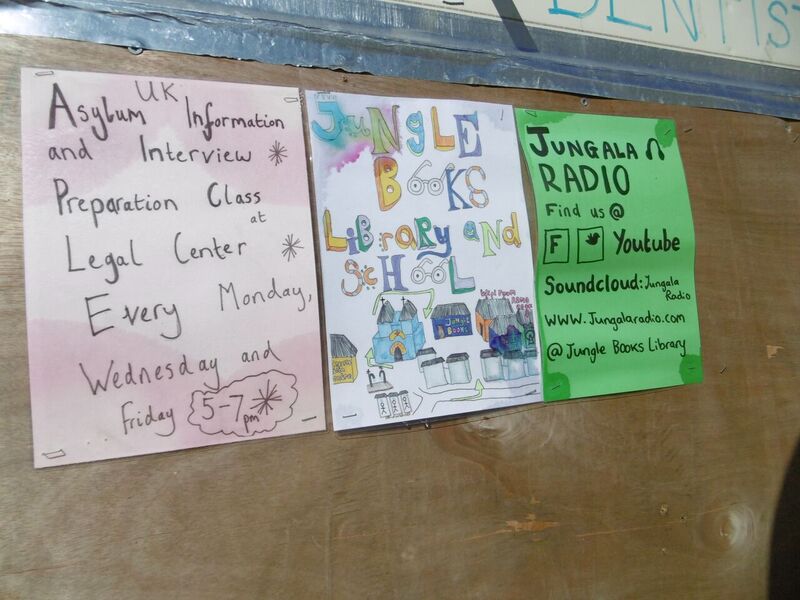
- Voices from the Jungle Digital Testimony Archive.
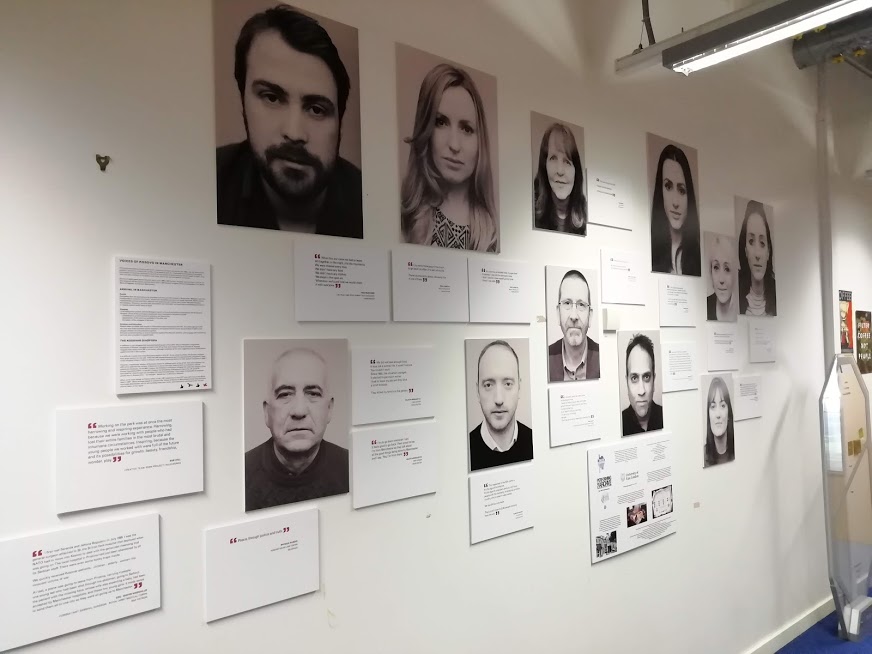
- The Voices of Kosovo in Manchester (VOKIM) Oral History Archive.
- Gujarati Yatra Oral History Archive
- Crossing the Borders Oral History Archive (oral history archive documenting the Chinese community in Manchester curated by the Wai Yin Society).
- Healing the Wounds Oral History Archive (Irish in South East London).
- Hidden Histories Archive curated by Eastside Community Heritage. Over 4,000 oral histories focusing on the history of East London collected over a 20 year period.
Group Activities
Group Activities
For the Tuesday afternoon (PM) session group activities for our session on Thursday, 9th October, we have established several mini online collections for you to explore and to start to devise your own creative responses too.
The collections I have chosen are as follows:
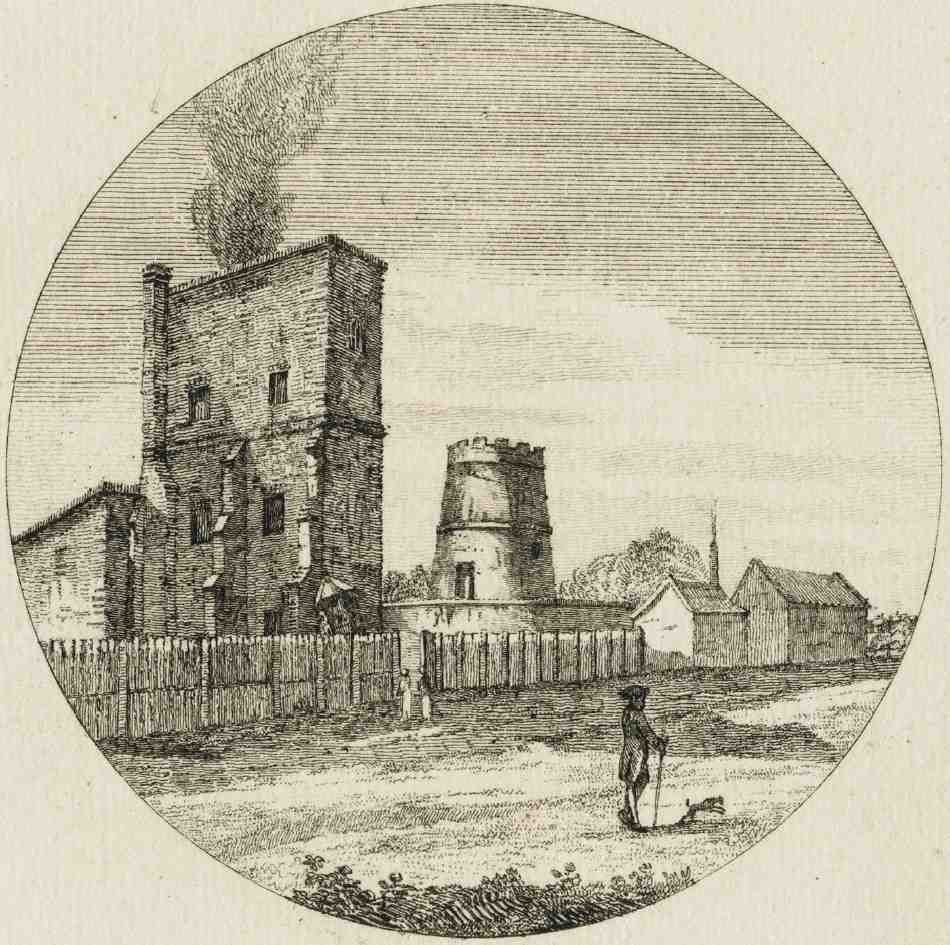
Group/Activity 1: New River Head.
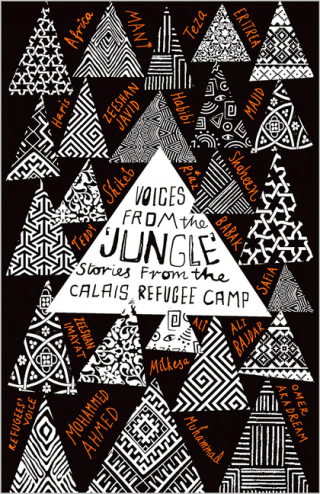
Group/Activity 2: Voices from the Jungle Digital Testimony Archive
Group/Activity 3: Photographs from Gideon Mendel from his book Dzhangal.
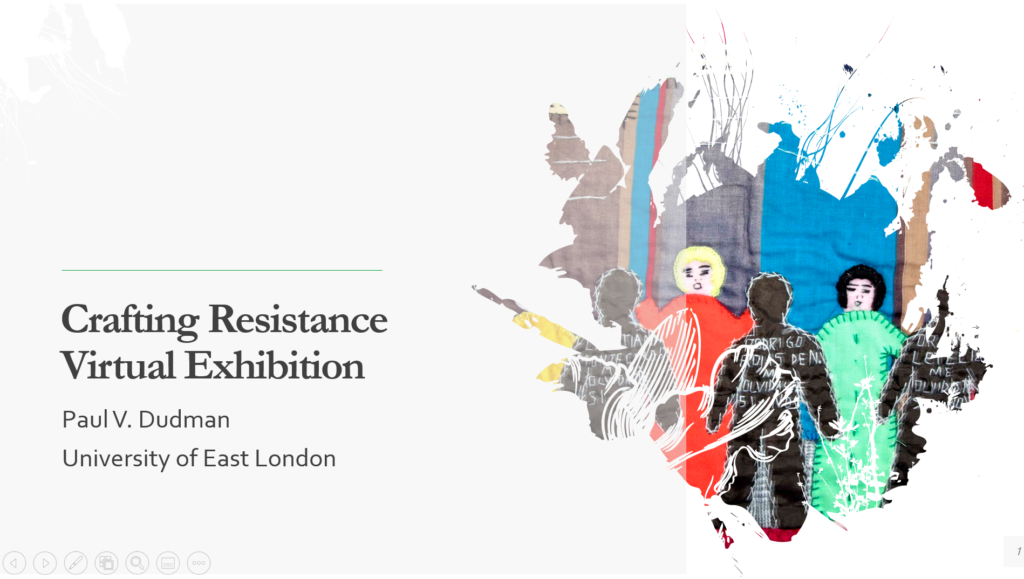
Group/Activity 4: Crafting Resistance Exhibition and Documenting Chile Project.
Group/Activity 5: Voices of Kosovo in Manchester oral history testimonies and accompanying exhibition images.
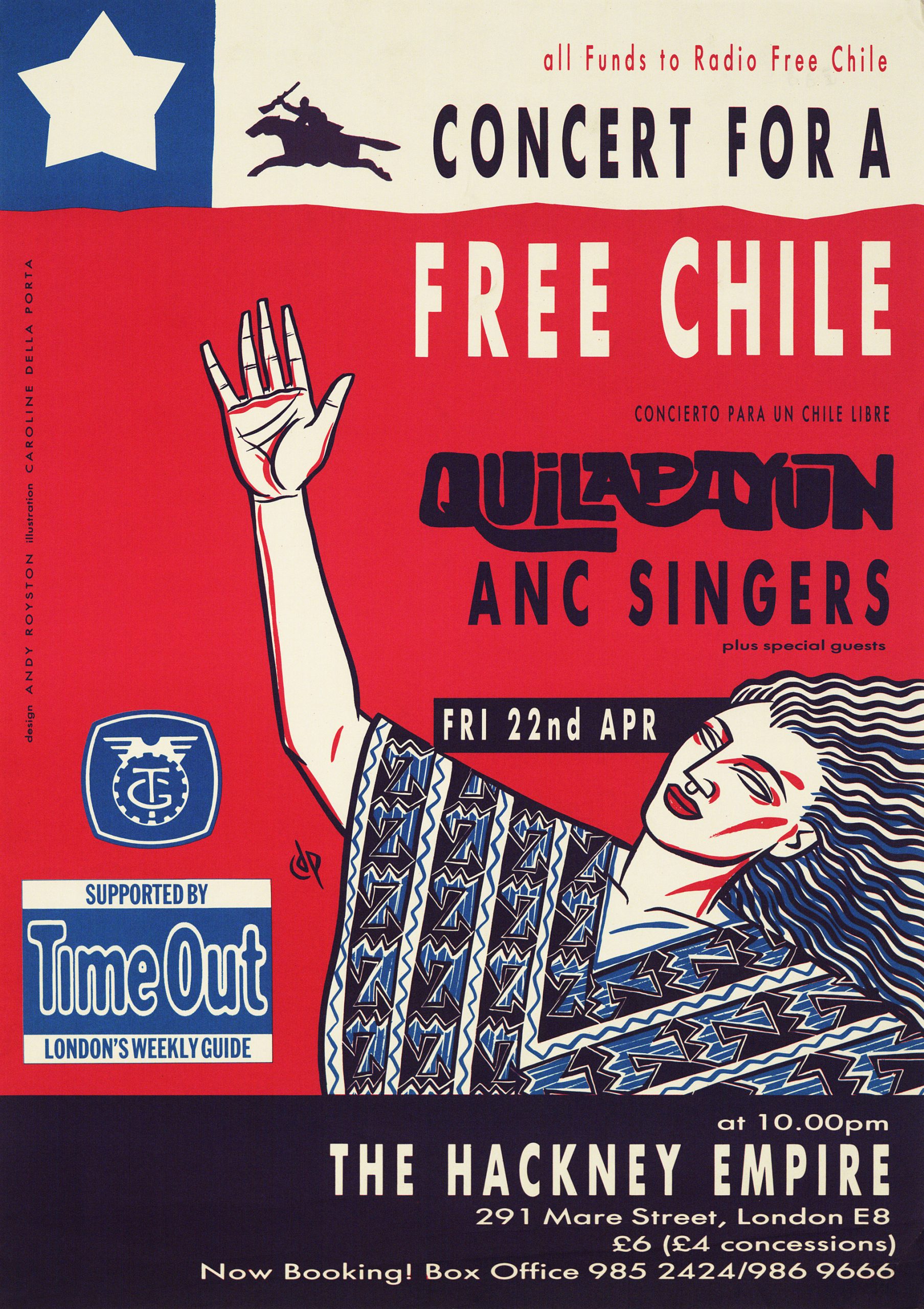
Group/Activity 6: Hackney Empire Theatre Posters.
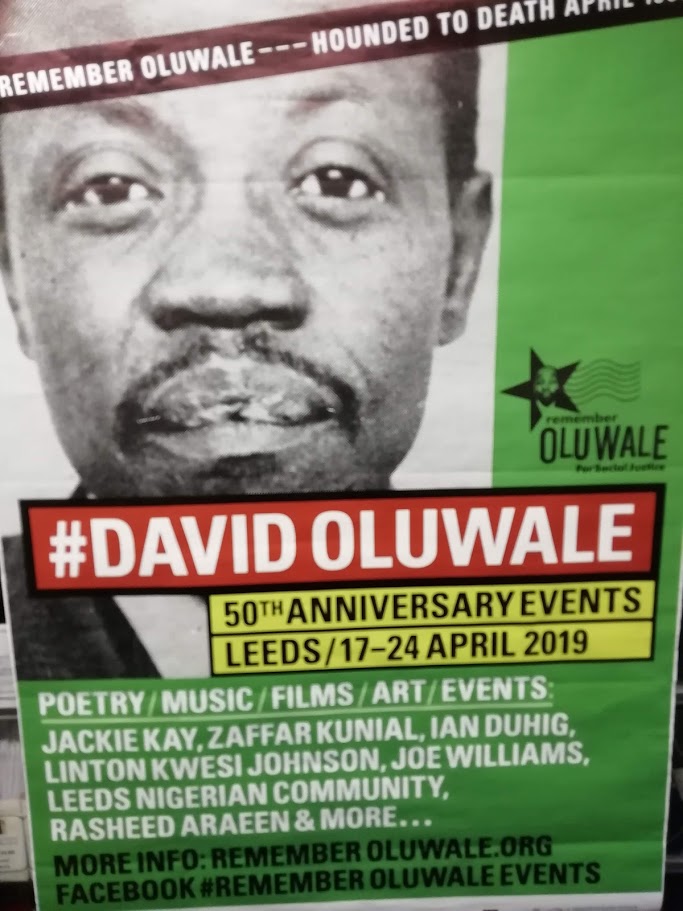
Group/Activity 7: David Oluwale. Individual Narrative Reflections.
Contact Details
Throughout this project I would be happy to help and support your creative work and to facilitate access to the Archival collecitons here at the University of East London.
Please do feel free to contact me and to ask any questions that you might have? My contact details are as follows:
Contact Information
Paul V. Dudman
UEL Archivist
E-mail: p.v.dudman@uel.ac.uk
Message: Via WhatsApp
Websites:
UEL Archives:- uel.ac.uk/student-life/library/archive
Personal Website:- paulvdudman.org.uk/
Social Media
Personal Twitter: @PaulVDudman
Archive Twitter: @LivingRefArch /@ArchivesUEL / @ArchivesUEL

Key Further Readings
Dudman, Paul V. (2020c). `Book Review: Mendel, Gideon (2017): Dzhangal. London: GOST Books ISBN: 978-1-910401.15-6.’ Displaced Voices: A Journal of Migration, Archives and Cultural Heritage, Volume 1, pp. 6-11. Available at: https://www.livingrefugeearchive.org/displaced-voices-volume-1/ [Accessed: 23/07/2020].
Dudman, P. V. and Hashem, R. (2015) ‘Democratic Access or Privileged Exclusion?’, Living Refugee Archive, 25 June. Available at: http://www.livingrefugeearchive.org/about/democratic-access-privileged-exclusion/ (Accessed: 20 July 2019).
Esin, C. and Lounasmaa, A. (2020) ‘Narrative and ethical (in)action: creating spaces of resistance with refugee-storytellers in the Calais “Jungle” camp’, International Journal of Social Research Methodology, 23(4), pp. 391–403. doi: 10.1080/13645579.2020.1723202.
Hashem, Rumana and Dudman, Paul V. (2016) ‘Paradoxical narratives of transcultural encounters of the “other”: Civic engagement with refugees and migrants in London’, Transnational Social Review, 6(1-2), pp. 192-199. doi: 10.1080/21931674.2016.1186376
Life stories – University of East London (UEL) (no date). Available at: https://www.uel.ac.uk/research/centre-for-narrative-research/collaborative-research-events/life-stories-at-the-jungle-refugee-camp-calais (Accessed: 23 March 2020).
LivingRefugeeArchive (2018) ‘Voices from the `Jungle’ Testimonies’, Living Refugee Archive, 23 November. Available at: https://www.livingrefugeearchive.org/voices-jungle-testimonies/ (Accessed: 1 October 2020).
Lounasmaa, A. and Esin, C. (2020) ‘Decolonisation, Representation, and Ethics in Visual Life Stories from the Jungle’, in Hughes, C., Ethics and Integrity in Visual Research Methods. Edited by S. Dodd. Emerald Publishing Limited. Available at: https://books.emeraldinsight.com/page/detail/Ethics-and-Integrity-in-Visual-Research-Methods/?k=9781787694200 (Accessed: 2 October 2020).
Marfleet, P. (2007) ‘Refugees and history: why we must address the past’, Refugee Survey Quarterly, 26, pp. 136–148.
Mendel, G. (2017) Dzhangal. GOST Books.
Oddy, J. (2020) ‘Digital Storytelling’, Living Refugee Archive, 10 June. Available at: https://www.livingrefugeearchive.org/exhibitions/digital-storytelling/ (Accessed: 1 October 2020).
Schwartz, J. M. and Cook, T. (2002) ‘Archives, records, and power: The making of modern memory’, Archival Science, 2(1–2), pp. 1–19. doi: 10.1007/BF02435628.
Stevens, M. (2009) Migration and identity in the UK heritage sector. London [England: London, p. 43. Available at: https://baringfoundation.org.uk/wp-content/uploads/2014/09/Stories.pdf (Accessed: 14 July 2019).
Western, T. (2020) ‘The Active Citizens Sound Archive’, Refugee Hosts, 2 April. Available at: https://refugeehosts.org/2020/04/02/the-active-citizens-sound-archive/ (Accessed: 24 May 2020).
Bibliography
A Face to Open Doors IWM London (no date) Imperial War Museums. Available at: https://www.iwm.org.uk/events/a-face-to-open-doors-iwm-london (Accessed: 1 October 2020).
Ai Weiwei History of Bombs (no date) Imperial War Museums. Available at: https://www.iwm.org.uk/events/ai-weiwei-history-of-bombs (Accessed: 1 October 2020).
Dietrich, D. and Adelstein, F. (2015) ‘Archival science, digital forensics, and new media art’, Digital Investigation, 14, pp. S137–S145. doi: 10.1016/j.diin.2015.05.004.
Dodd, S. (2020) Ethics and Integrity in Visual Research Methods. Emerald Publishing Limited. Available at: https://books.emeraldinsight.com/page/detail/Ethics-and-Integrity-in-Visual-Research-Methods/?k=9781787694200 (Accessed: 2 October 2020).
Dudman, P. V. (2020a) ‘Draft of Article: Why Displaced Voices? Introduction and Reflection at the Intersection of Migration, Archives and Cultural Heritage.’, Paul V Dudman, 28 August. Available at: https://www.paulvdudman.org.uk/draft-of-article-why-displaced-voices-introduction-and-reflection-at-the-intersection-of-migration-archives-and-cultural-heritage/ (Accessed: 1 October 2020).
Dudman, Paul V. (2020b).`Editorial – Why Displaced Voices?’ Displaced Voices: A Journal of Migration, Archives and Cultural Heritage, Volume 1, pp. 6-11. Available at: https://www.livingrefugeearchive.org/displaced-voices-volume-1/ [Accessed: 23/07/2020].
Dudman, Paul V. (2020c). `Book Review: Mendel, Gideon (2017): Dzhangal. London: GOST Books ISBN: 978-1-910401.15-6.’ Displaced Voices: A Journal of Migration, Archives and Cultural Heritage, Volume 1, pp. 6-11. Available at: https://www.livingrefugeearchive.org/displaced-voices-volume-1/ [Accessed: 23/07/2020].
Dudman, P. V. (2019a) ‘Contested Histories, Intangible Heritage: Human Rights and The German Occupation Memorial and Eleven Emlekmű (Eleven Memorial) in Budapest, Hungary’, Citizens Voices, 12, pp. 24–29.
Dudman, P. V. (2019b) ‘#volsecarchives: Human rights in records and the Campaign for Voluntary Sector Archives’, Citizens Voices, pp. 20–27.
Dudman, P. V. and Hashem, R. (2015) ‘Democratic Access or Privileged Exclusion?’, Living Refugee Archive, 25 June. Available at: http://www.livingrefugeearchive.org/about/democratic-access-privileged-exclusion/ (Accessed: 20 July 2019).
Dudman, P. V. and Hashem, R. (2019) ‘Documenting untold resilience and moving memories with displacement: narratives of asylum-seekers and refugees in Britain’.
Dzhangal Archaeology interview with artist Gideon Mendel (no date). Available at: https://www.youtube.com/watch?v=9ZJt5Kc6uj0 (Accessed: 13 April 2020).
Esin, C. and Lounasmaa, A. (2020) ‘Narrative and ethical (in)action: creating spaces of resistance with refugee-storytellers in the Calais “Jungle” camp’, International Journal of Social Research Methodology, 23(4), pp. 391–403. doi: 10.1080/13645579.2020.1723202.
Hagan, M. (2018) Disassembling the Camp: The Politics of Policing Exiles in Calais, France. SSRN Scholarly Paper ID 3274536. Rochester, NY: Social Science Research Network. doi: 10.2139/ssrn.3274536.
Hamilakis, Y. (2019) ‘Planet of camps: border assemblages and their challenges’, Antiquity, 93(371), pp. 1371–1377. doi: 10.15184/aqy.2019.163.
Hashem, Rumana and Dudman, Paul V. (2016) ‘Paradoxical narratives of transcultural encounters of the “other”: Civic engagement with refugees and migrants in London’, Transnational Social Review, 6(1-2), pp. 192-199. doi: 10.1080/21931674.2016.1186376
Hicks, D. and Mallet, S. (2019) Lande : The Calais ‘Jungle’ and Beyond. Policy Press. Available at: https://library.oapen.org/handle/20.500.12657/25232 (Accessed: 1 October 2020).
Kirschenbaum, M. G. et al. (2010) Digital forensics and born-digital content in cultural heritage collections. Washington, D.C: Council on Library and Information Resources (CLIR publication, no. 149).
Lande: The Calais ‘Jungle’ and Beyond (no date). Available at: /event/lande (Accessed: 1 October 2020).
Lee, C. (2012) ‘Archival application of digital forensics methods for authenticity, description and access provision’, Comma, 2012(2), pp. 133–140. doi: 10.3828/comma.2012.2.14.
Life in a Camp (no date) Imperial War Museums. Available at: https://www.iwm.org.uk/events/life-in-a-camp (Accessed: 1 October 2020).
Life stories – University of East London (UEL) (no date). Available at: https://www.uel.ac.uk/research/centre-for-narrative-research/collaborative-research-events/life-stories-at-the-jungle-refugee-camp-calais (Accessed: 23 March 2020).
LivingRefugeeArchive (2018) ‘Voices from the `Jungle’ Testimonies’, Living Refugee Archive, 23 November. Available at: https://www.livingrefugeearchive.org/voices-jungle-testimonies/ (Accessed: 1 October 2020).
LivingRefugeeArchive (2020a) ‘Amin Kamrani’s 20/20 Virtual Exhibition’, Living Refugee Archive, 13 September. Available at: https://www.livingrefugeearchive.org/exhibitions/20-20-virtual-exhibition/ (Accessed: 1 October 2020).
LivingRefugeeArchive (2020b) ‘Hopetowns Poetry Archive’, Living Refugee Archive, 6 June. Available at: https://www.livingrefugeearchive.org/archives/hopetowns-poetry-archive/ (Accessed: 1 October 2020).
LivingRefugeeArchive (2020c) ‘Modern Day Slavery: A Journey Ahead to End the Cycle’, Living Refugee Archive, 9 March. Available at: https://www.livingrefugeearchive.org/exhibitions/a-journey-ahead-to-end-the-cycle/ (Accessed: 1 October 2020).
LivingRefugeeArchive (2020d) ‘Refugee Psychology and Psychosocial Interventions: A History’, Living Refugee Archive, 25 August. Available at: https://www.livingrefugeearchive.org/exhibitions/refugee-psychology-and-psychosocial-interventions-a-history/ (Accessed: 1 October 2020).
London Group AGM and The Dzhangal Archaeology project | The Institute for Archaeologists (no date). Available at: https://www.archaeologists.net/civicrm/event/info?reset=1&id=41 (Accessed: 13 April 2020).
Lounasmaa, A. and Esin, C. (2020) ‘Decolonisation, Representation, and Ethics in Visual Life Stories from the Jungle’, in Hughes, C., Ethics and Integrity in Visual Research Methods. Edited by S. Dodd. Emerald Publishing Limited. Available at: https://books.emeraldinsight.com/page/detail/Ethics-and-Integrity-in-Visual-Research-Methods/?k=9781787694200 (Accessed: 2 October 2020).
Marfleet, P. (2007) ‘Refugees and history: why we must address the past’, Refugee Survey Quarterly, 26, pp. 136–148.
Mendel, G. (2017) Dzhangal. GOST Books.
Oddy, J. (2020) ‘Digital Storytelling’, Living Refugee Archive, 10 June. Available at: https://www.livingrefugeearchive.org/exhibitions/digital-storytelling/ (Accessed: 1 October 2020).
Refugee Heritage: the archaeology of the Calais ‘Jungle’ (no date). Available at: /article/refugee-heritage-archaeology-calais-jungle (Accessed: 13 April 2020).
Refugees: Forced to Flee (no date) Imperial War Museums. Available at: https://www.iwm.org.uk/events/refugees-forced-to-flee (Accessed: 1 October 2020).
The case for an archaeology of the ‘Jungle’ (no date) MOLA. Available at: https://www.mola.org.uk/blog/case-archaeology-jungle (Accessed: 13 April 2020).
The Dzhangal Archaeology Project: an archaeological perspective on modern migration (no date) MOLA. Available at: https://www.mola.org.uk/blog/dzhangal-archaeology-project-archaeological-perspective-modern-migration (Accessed: 13 April 2020).
Toys, tins and tear gas: recording objects from the Calais ‘Jungle’ (no date) MOLA. Available at: https://www.mola.org.uk/blog/toys-tins-and-tear-gas-recording-objects-calais-jungle (Accessed: 13 April 2020).
Writers, C. (2017) Voices from the ‘Jungle’: stories from the Calais refugee camp. Edited by M. Godin et al. London: Pluto Press.
Mendel, G. (2017) Dzhangal. GOST Books.
‘Multimodal narratives – Calais’ (2016) Educating without borders: UEL and friends in Calais and beyond, 9 June. Available at: https://educatingwithoutborders.wordpress.com/creating-multimodal-narratives-in-the-calais-camp/ (Accessed: 13 April 2020).
Writers, C. (2017) Voices from the ‘Jungle’: stories from the Calais refugee camp. Edited by M. Godin et al. London: Pluto Press.