Guest Post:
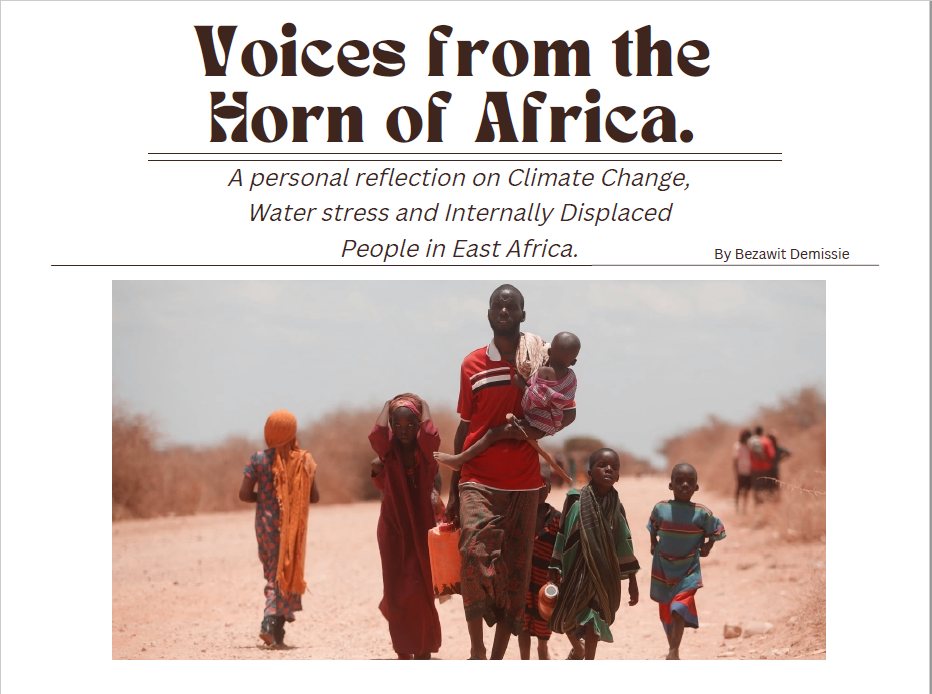
Voices from the Horn of Africa
A personal reflection on Climate Change, Water stress and Internally Displaced People in East Africa.
By Bezawit Demissie.
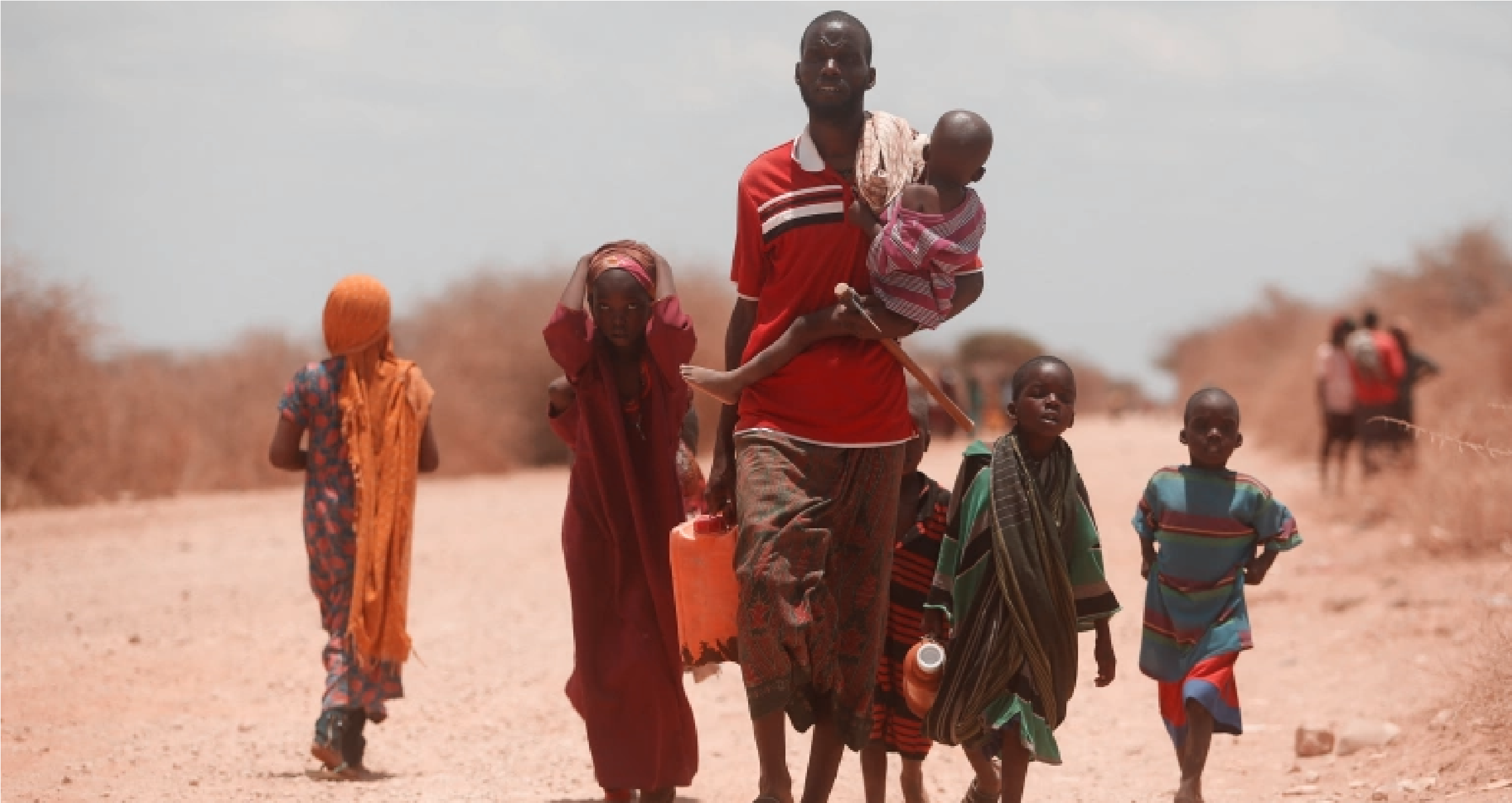
In 2016 Mary Robinson (former President of Ireland and UN high Commissioner for Human Rights), visited the terrains of Northern Ethiopia in Adigrat. At the time El Nino overshadowed Ethiopia, plunging many into the darkness of hunger, drought, and lost hope. While production units in the Global North rejoiced over trade surpluses, profits and positions in stock markets, the South mourned over its fate. While witnessing this calamity Robinson exclaimed, ‘‘I don’t think the impact El Nino aggravated by climate change, has received the attention that it should have from the international community.’’ And she was right, but what hasn’t changed is the continued neglection of the world’s most deprived. It is beyond marginalization, it’s as if only a few are entitled to life on earth and are decision makers while the other majority clung on to the leftovers of toxic air and policies. I remember being a little girl and sitting in my mother’s car, while we roamed the streets of Addis Ababa. Every few minutes the traffic lights hit, a destitute mother came carrying her child, begging for a few cents to ease the hunger. At the sight of their anguish, I wondered why this was so. I contemplated on the differing resources various societal groups held while simultaneously existing in a single unit. Why is there inequity? Why don’t we share the world justly if it belongs to all of us? These mothers fled their homes, because their vegetations no longer blossomed. Agriculture shifted from a way of life to luxury for may farming families. Water was never at arm’s reach and food was not so basic anymore. And here we are many years later, the situation has only become worse.
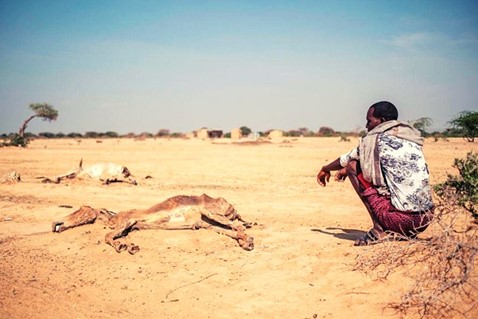
Over 13.7 million East Africans are currently internally displaced (UNHCR, 2022). And 24.1 million, 4.2 million and 7.8 million people in Ethiopia, Kenya and Somalia respectively are experiencing severe water stress. (0CHA 2022). The causes of these developments have been defined by experts as the culmination of both environmental and societal factors. These reports further analyse the degradation of freshwater due to droughts and pollution and the extreme rise of water levels. We often hear about climate adaptation and sustainability initiatives. But what should be noted is the fragile socioeconomic infrastructures in most vulnerable countries where climate change has hit most. The very first problem lies in the notion of this being, just a ‘humanitarian call’. Humanitarian action without development initiatives leaves nothing but protracted situations. The Global South is fettered by the notion and practicality of humanitarian assistance, without exploring long-term sustainable development approaches. Human insecurity is the biproduct of a failed state system. And this can be noted from the evidence which implies that out of 10 African countries with huge numbers of IDPs 9 of them have governments with authoritarian tendencies.(Williams, 2019).
What is needed, is the continuous collaboration between development initiatives, development actors and the proper administration of socio-political affairs. The realisation of SDGs cannot come to fruition if the existing infrastructures in East Africa, do not comply to the overall framework of regional and international initiatives pertaining to climate adaptation and rehabilitation. The responsibility also lies within the Global North and it’s role to support the South in the development of its infrastructures as a form of reparation. If these arrangements do not become legally binding amongst the various members of the international community, what is at stake here is exacerbated conditions of climate change and the continued vulnerability of IDPs to abject poverty and state insecurity. Hence, why this should be an alarm to treating the calamity of IDPs as a development challenge rather than solely humanitarian.
Collective power is also paramount. Regional integration amongst African countries can help alleviate vulnerability as well as prevent potential conflicts over depleting resources. Collectively acknowledging the issue of climate change can become the stepping stone to multilaterally negotiate with the North for proper Loss and Damage funds. And these funds can then be allocated for water transportation and land rehabilitation schemes. But what should be considered here is the idea which goes beyond the call for a ‘Loss and Damage fund’. Aid is a humanitarian answer Africa has clung on to for many years, but what about the loss of capital in Africa. 192 billion dollars leave the African continent each year through majorly illegal means, out of which 35.5 billion is from tax evasion by MNCs.(Curtis Research, 2014). When and how can these losses be returned? Another key aspect to highlight should also be the potential rise of conflicts over depleting resources in Africa. The rising trend of drought in East Africa could have the potential of culminating into intra-community and on a large scale inter-state conflicts.
Preventive diplomacy should come at the forefront of all regional efforts in East Africa and Africa as whole. This is due to the fact that, climate adaptation being an environmental response to climate change, cannot give us all the answers if our socio-political configurations and infrastructures are highly susceptible to conflicts. 85% of Africa’s water reserves lie at large river basins many of which are shared. (Ashton 2002). Hence, environmental measures through climate adaptation should go hand in hand with adequate diplomatic efforts, to bridge the gap between allocation of funds for adaptation to rehabilitation schemes and implementation.
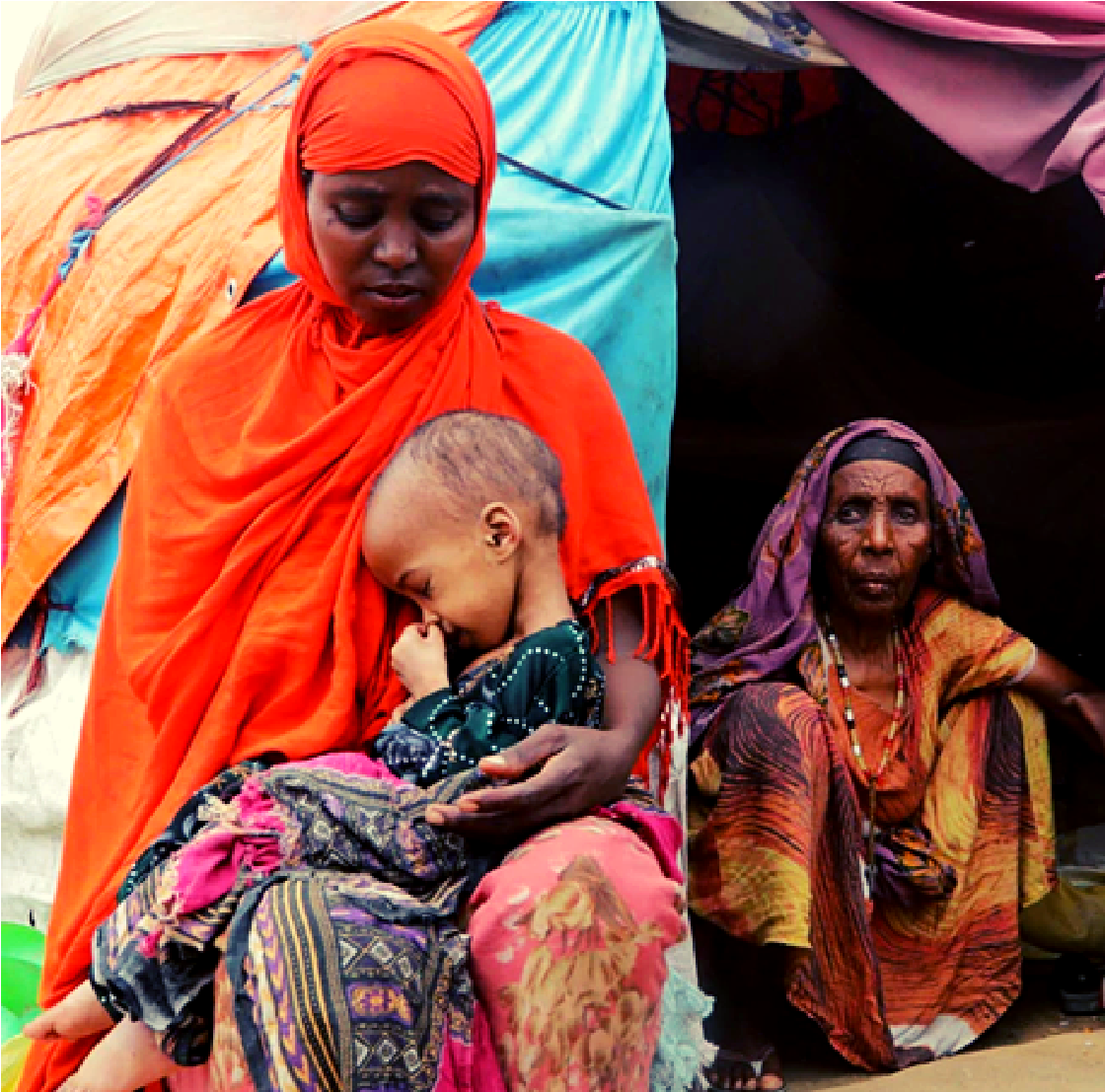
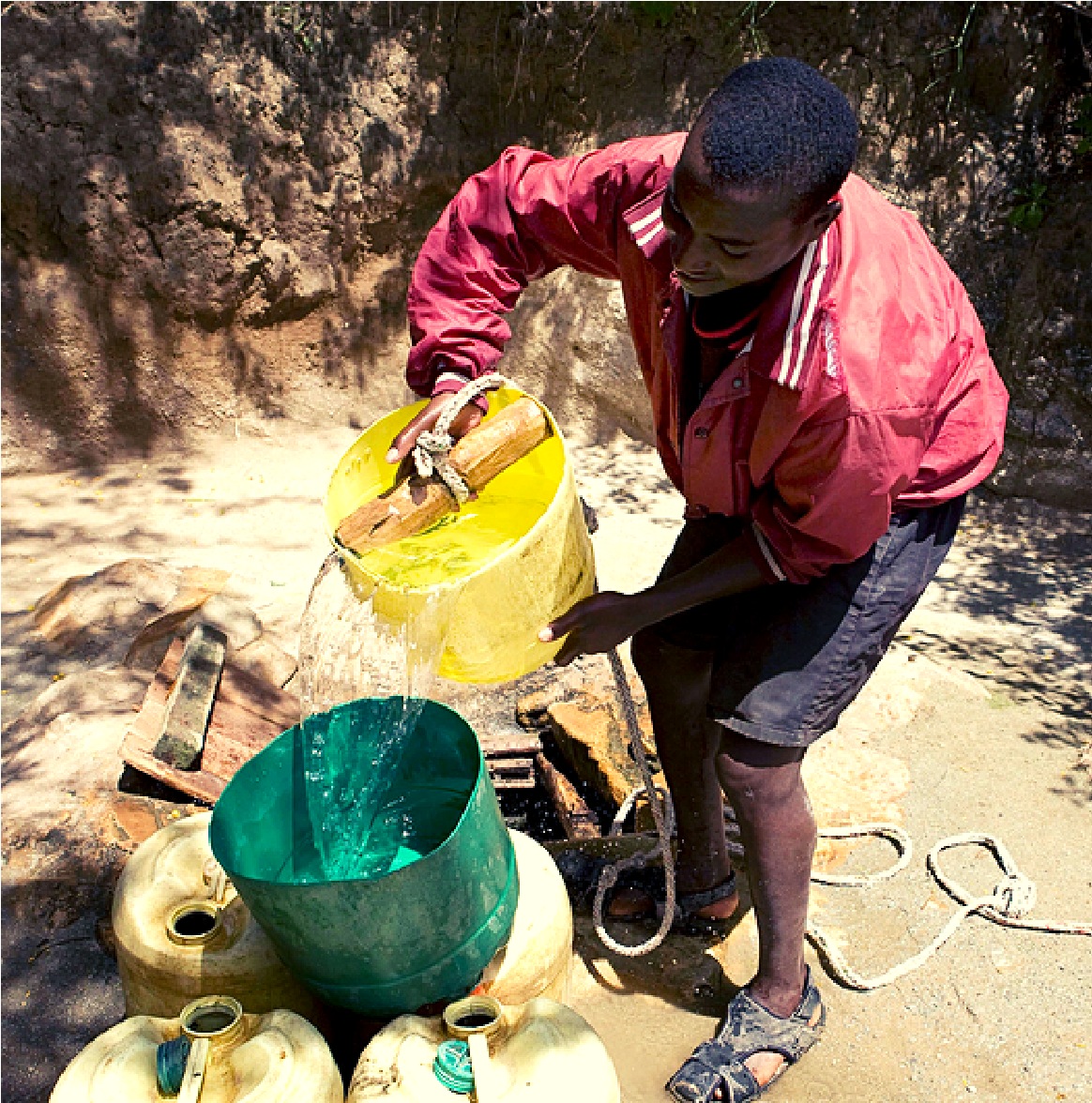
In light of these arguments, the plight of IDPs in East Africa at the moment cannot wait for the allocation of a loss and damage fund and over contemplated negotiations. Nor, can we tackle this urgent issue through highlighting long-term solutions. However, what is needed is pragmatic measures for outreach and assistance. Humanitarian efforts can help alleviate the current symptoms and implications. However, the need to view this from a developmental perspective should never go unnoticed. The international community needs to recognise IDPs across East Africa not just for case studies and data catalogues, but as an indication of a human rights issue. This should become a global challenge rather than just a regional phenomenon. The Anthropocene has manifested deliriously in the global south. And the world ought not to sit back and watch.
Voices from the Horn of Africa
Download the PDF version of this blog post.
LRA Blog Disclaimer
The views expressed on this blog are attributable to their individual authors writing in their personal capacity only, and not to any other author, the editors, or any other person, organization or institution with which the author might be affiliated unless explicitly stated so.