Introducing The Amplification Project: Digital Archive for Forced Migration, Contemporary Art, and Action
by Dr. Kathy Carbone.
https://gseis.ucla.edu/directory/kathy-carbone/
Keywords: community participatory archives, forced migration art, archival activism.
Introduction
Around the world, an increasing number of artists and art institutions are responding to the displacement of peoples to provoke reflection on stories of forced migration, create new narratives about refugeehood, and explore relations between location and dislocation, inclusion and exclusion, representation and visibility, longing and belonging. Art ‘is the most direct intensification of the resonance and dissonance, between bodies and the cosmos, between one milieu or rhythm and another’, writes philosopher Elizabeth Grosz (Grosz, 2008, p. 23-24). Both from the world and for the world, art, quite literally, brings us to our senses—the sensory force of colour, sound, movement, form, rhythm, void, volume, and surface—directly intensifying life. Moreover, art can do things: its affective power and impact on the social imaginary can engender emotional responses, stimulate thinking and dialogue, and open us up to diverse people, situations, and places in (often) unanticipated ways. In addition, artworks embody the activities and experiences of their makers and reflect the relationships and contexts in which they were made. They are indications of the process and conditions of their making and offer, art critic John Berger argues, ‘direct testimony about the world which surrounded other people at other times’ (Berger, 1972, p.10). Forced migration art, which I define as contemporary visual and performing art in any media that narrates and portrays realities and experiences of forced migration, has great importance as an art form and a political movement. As forced migration art bears witness to, offers “direct testimony” about, and memorializes the complex experiences of displacement, it is a vital history and cultural heritage to preserve for today, and the future.
This blog post introduces The Amplification Project: Digital Archive for Forced Migration, Contemporary Art, and Action (theamplificationproject.com), a community-led public participatory digital archive that documents, preserves, and shares art and activist projects inspired, influenced, or affected by experiences of conflict and displacement. The Amplification Project is an open platform for artists and activists to upload easily, describe, store, and disseminate new or existing artwork and activist projects about crossing borders, refuge, and belonging. The Amplification Project was co-founded in March 2019 by an international group of artists, curators, activists, and an archivist/researcher (the author). The group, now known as The Amplification Project’s “collective advisory group,” collaboratively developed The Amplification Project’s mission, vision, and goals, and continue to work together to promote, sustain, and grow the archive. In April 2020, we (soft) launched the archive on the open-source platform, Omeka. The archive currently contains 95 items representing the work of 11 artists from around the world.
Archival Activism
Archival activism—an activist and social justice approach to archiving, often associated with a political agenda to transform society and confront inequities—undergirds The Amplification Project. I use the term to define an archivist’s active role in creating, describing, and providing access to archives to challenge injustice and discrimination, and attuned to the needs of individuals, groups, and communities—especially those who have been marginalized, misrepresented, or silenced by archival enterprises. It is an archiving approach that includes rather than excludes and opens possibilities for radical connection and social change.
The Amplification Project is a consciously political, activist interventionist archive. By which I mean, not only does the community seek to document, preserve, and share the collective memory of forced migration art and activism, but also to (1) intervene in and counteract public and political anti-refugee and xenophobic rhetoric; (2) be a countermeasure to the often depersonalized and dehumanized visual representation of refugees in the media; (3) be a corrective to the representation of refugees in mainstream archives, representations that are often one-dimensional, lacking complexity and recognition of the day-to-day realities and experiences of displacement, and where people are often denied their voice and reduced to statistics and categories in the contexts of their interactions with the state, judicial systems, or NGOs; (4) build solidarities; and lastly, (5) use archiving to speak to inequities and injustices around refugeehood and displacement. These aims might sound idealistic, even utopian. Still, there is power in small gestures in specific situations and places—especially gestures enabled by digital technologies—which can engender individual and collective, local and global effects that anticipate and provoke change in the broader social and political fabric.
The Amplification Project’s plans include growing the archive’s collection; developing ways to work hand-in-hand with, support, and promote local, national, and transnational art practices, activist projects, and conversations related to displacement; redesigning the archive’s interface including rendering the website in Arabic, French, and Spanish; and, hosting an annual artist residency and virtual and physical exhibition.
Conclusion
Community-led participatory digital archives are strategies of visibility, agency, and a way of positioning a community and its collective memories in the world. They can also be strategic interventions—interruptive tools to disturb and reframe public and political discussions, and social realities and relations. As a space of agency, exchange, interaction, and connectivity, The Amplification Project aims to make refugee voices, realities and experiences, concerns, and memories more explicit, visible, and audible and cultivate politico-aesthetic archival practices of expressive resistance.
Bibliography
Berger, J. (1972). Ways of seeing. (London: British Broadcasting Corporation and Penguin Books.
Grosz, E. (2008). Chaos, territory, art: Deleuze and the framing of the earth. New York: Columbia University Press.
Notes
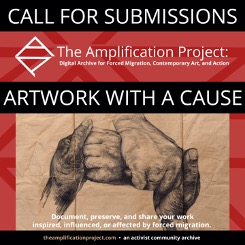
Image 1: Graphic and drawing by Lilli Muller, 2020.
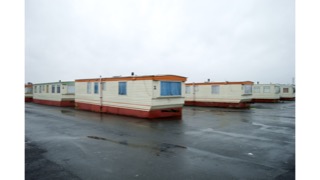
Image 2 “Athlone DP Centre, by Vukašin Nedeljković, 2013