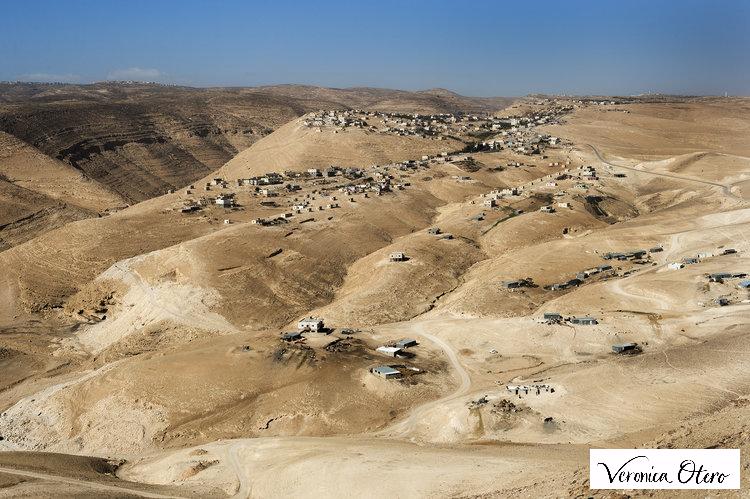
Bedouin of Palestine: People of the Desert. The Rashaydeh family.View of the Bedouin village of Arab Al-Rashaydeh presently located 20 km southeast of the city of Bethlehem in the Jordan Valley desert, West Bank, which dates back to 1983. The Bedouin are indigenous inhabitants of Palestine and mainly identify themselves as Arab Palestinians, but use the term Bedouin to refer to their semi-nomadic way of life. The Rashaydeh family belong to Beni Rashid tribe, which come from the Arabic Peninsula 500 years ago. The tribe first came to the area when they were forcibly displaced from their original land in Ein Gedi, on the shores of the Dead Sea, during the 1967 Israeli occupation of the West Bank and Gaza. Prior to 1983, they were resettled in the nearby village of Tuqu’, which is located about 6 km away from its actual location.
The Rashaydeh tribe is formed of several extended families, which comprises around 2,000 people, an estimation of about 3000 people of this tribe are estimated to live in Jordan where they fled to during the 1967 war. About 50,000 Bedouin live in the Israeli-occupied West Bank. Also, close to 210,000 live today in Israel. The people of Arab Al-Rashaydeh have been subjected to several home demolitions and remain at risk of displacement, among other repressive operations, due to the fact that their village’s territory is located in “Area C”, which falls under full Israeli control, according to the Oslo Agreement.
The Rashaydeh tribe is formed of several extended families, which comprises around 2,000 people, an estimation of about 3000 people of this tribe are estimated to live in Jordan where they fled to during the 1967 war. About 50,000 Bedouin live in the Israeli-occupied West Bank. Also, close to 210,000 live today in Israel. The people of Arab Al-Rashaydeh have been subjected to several home demolitions and remain at risk of displacement, among other repressive operations, due to the fact that their village’s territory is located in “Area C”, which falls under full Israeli control, according to the Oslo Agreement.
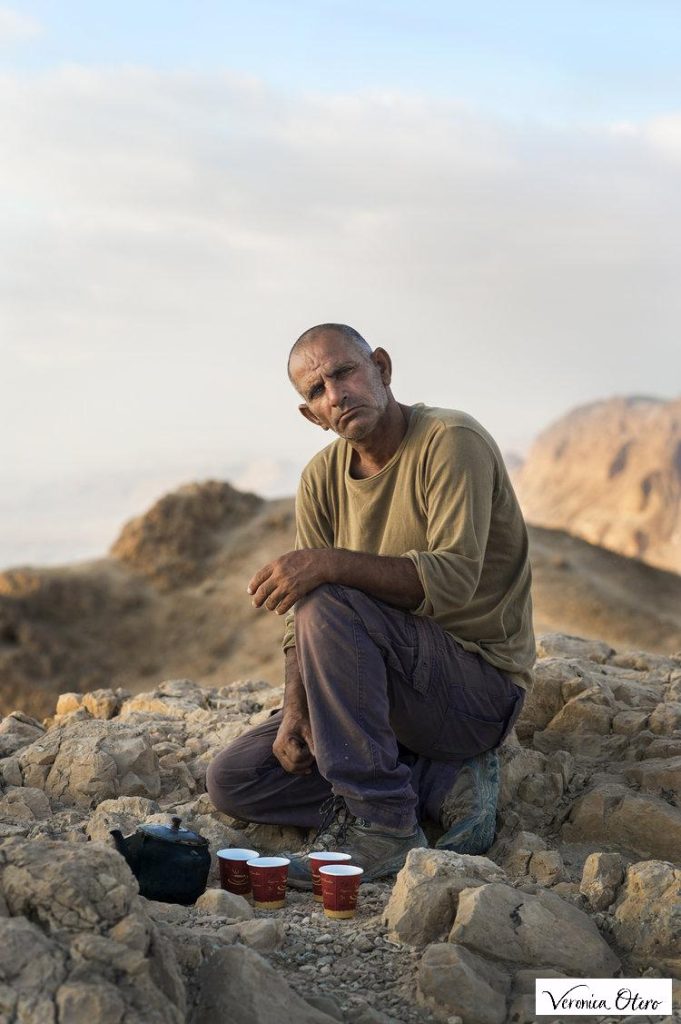
Bedouin of Palestine: People of the Desert. The Rashaydeh family.Abu Ishmael Muhammad (51) has two wives and is father to 13 children. He and his two wives live together with their unmarried sons and daughters, his married son and partner and their newborn baby, while his four oldest daughter live with their husbands in a different household. Abu Ishmael family household consists of 5 units, a domestic unit for him, his wives, single sons, and younger daughters, with a functional section that serves as a kitchen and a separate larger unit for his married son and partner, which include a room exclusively for receiving guests and kinsmen alike. A few metres apart are two shelters for their animals. Traditions such as polygamy are still common in the tribe. Bedouin families where the father has two or three wives could include as many as 30 children. These extended families are known as hamula, the more members a family has the stronger it is. The Quran allows a man to have four wives, but it stipulates that all should be treated equally. Marriage between relatives is also a cultural tradition related to tribal conventions. They still follow the old tribal honor codes and a patrilineal inheritance.
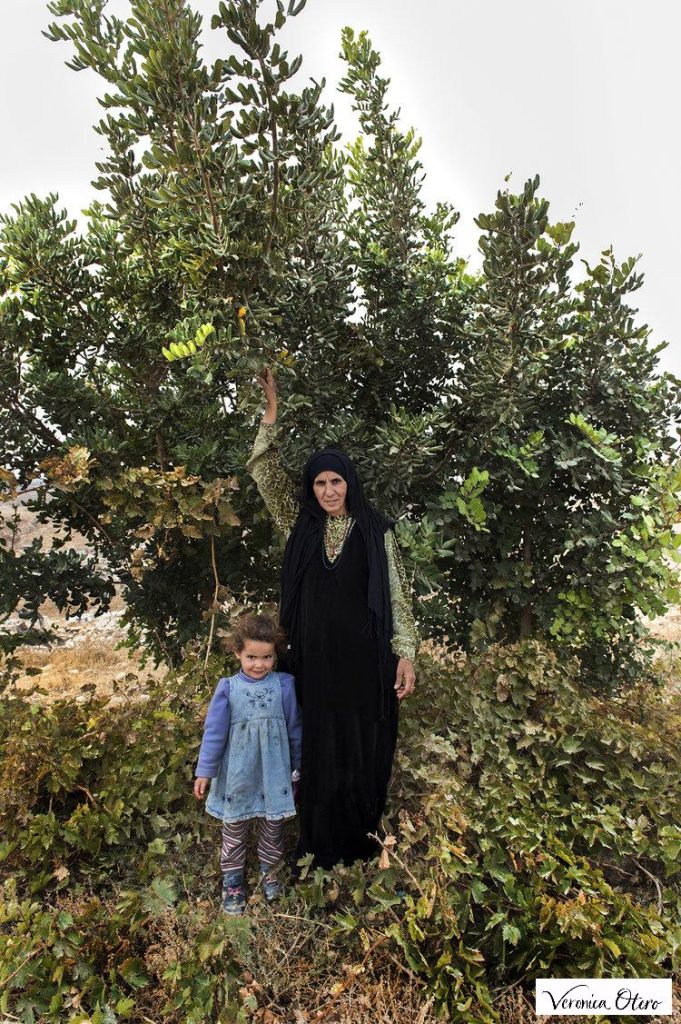
Bedouin of Palestine: People of the Desert. The Rashaydeh family.Nadah (50) first wife and mother of 8, next to Shekha, the youngest child of his husband’s second marriage. She, recently, made the journey to Mecca with other members of her tribe. Bedouin women wear long dresses, sometimes adorned with shiny traditional embroidery and they will always cover their hair with a shawl. It is very common to see the use of protective amulets against malevolent spirits, or the “envious eye”, and a Muslim prayer beaded necklace.
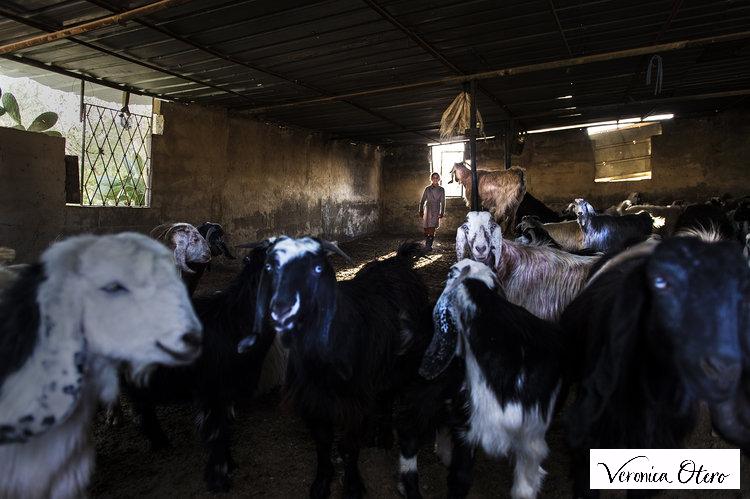
Bedouin of Palestine: People of the Desert. The Rashaydeh family.On Najwa’s return from school, she changes her uniform to help her family with the care of the goats. At age of 7 or 8, children begin to take care of simple household duties and soon after that, they are regarded as full working members of the group.Each family has a herd of goats or sheep, which is essential to their survival for the supply of meat and dairy products. The herd is taken to graze twice a day. Women handle the domestic animals such as goats, sheep, and chicken, while men typically take care of the camels. The Arab Al-Rashaydeh village is characterized by livestock rearing and the production of animal products, some of their dairy products are sold to Palestinian markets.
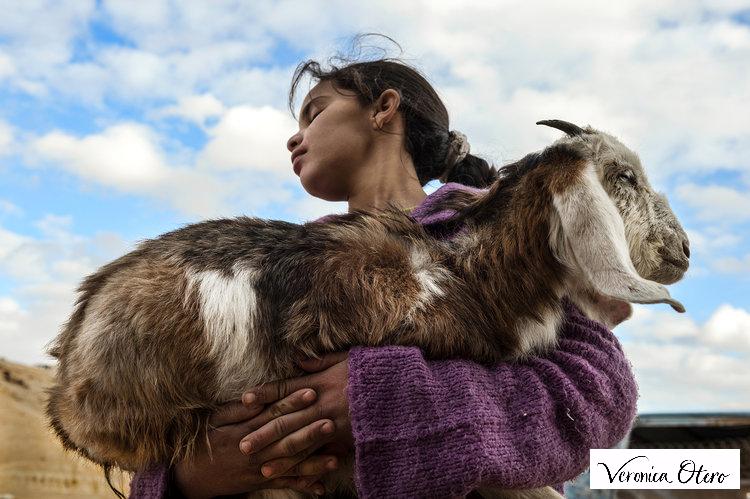
Bedouin of Palestine: People of the Desert. The Rashaydeh family.Nejah (11), Najwa’s twin sister, plays with a goat during the grazing time. In the past Bedouin communities could spread out on large areas of land, according to the seasons and the availability of pastures and water. Now they can only move within a 500 metres or 1 km around the village. Bedouins are heavily reliant upon pastures and water sources to support their livelihoods.
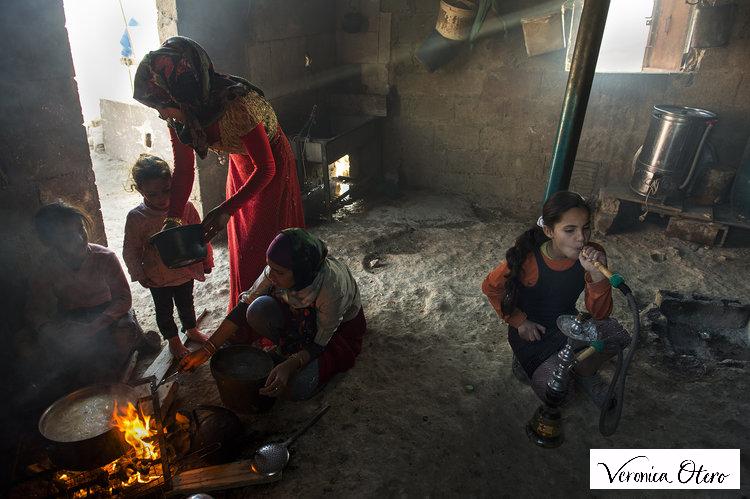
Bedouin of Palestine: People of the Desert. The Rashaydeh family.Left side, Najat and Shekha, sit next to the fire, while Anoud and Horeah are cooking. Bedouin food includes bread, rice, fresh fruit and vegetables, and milk from goats, which is made into yogurt or butter. Chicken is the main type of poultry that is consumed, normally once or twice a week, while meat from goats and sheep is only served on special occasions such as marriage feasts or ceremonial events, or when guests are present. The host traditionally does not eat until all his guests are finished. Food is often cooked over an open fire made in a pit with three stones, seasoned rice and bread are placed in a large bowl, and they sit around on the ground and eat with their fingers. On the right side of the photograph, Nejah prepares a shisha for the men who are relaxing outside of the house. The women are not allowed to smoke.
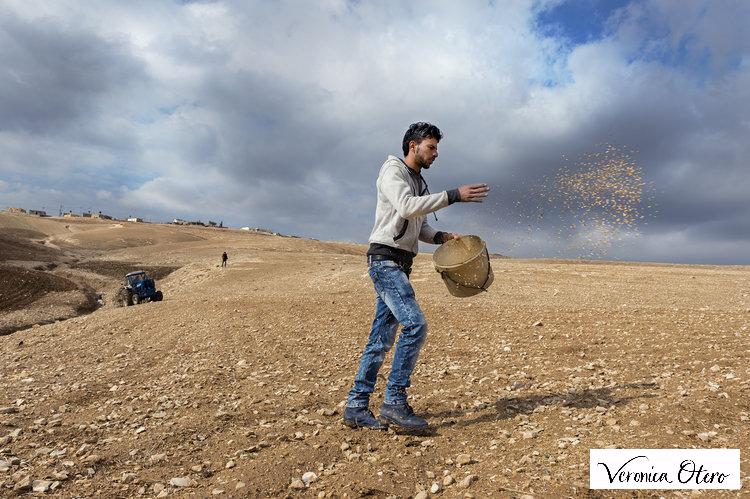
Bedouin of Palestine: People of the Desert. The Rashaydeh family.Omar (23) and his brothers are planting their crops in the valleys nearby at the onset of the rains. The Jordan Valley region is suitable for agriculture due to its fertile soil, fresh water resources, and unique climatic conditions. Wheat and barley are the main field crops harvested. Israel's land policy for confiscation and seizure applied in Occupied Palestine was adapted from the Ottoman Land Code of 1858, according to an intricate system of land ownership, lands that were not registered or failed to get any official recognition of land ownership, were requisitioned by the State. Many Bedouin tribes hardly bothered with any form of legal written contract and were satisfies when the community bore witness. Consequently, only a small percentage of Bedouin can continue farming the land and grazing their herds. The Rashaydeh people claim to have a hujja, a written legal document based on Islamic principles and Ottoman law, asserting their presence for decades in the area, grazing and herding while also practicing agriculture intermittently. The economy in Arab Al-Rashaydeh is highly dependent on the agricultural sector, which depends mostly on rainwater.
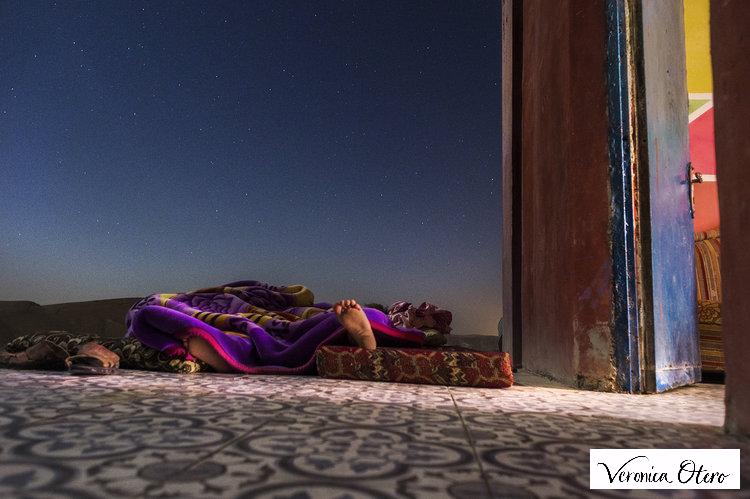
Bedouin of Palestine: People of the Desert. The Rashaydeh family.The recently married couple, Ishmael and Anud, whom is heavily pregnant, sleeps outdoors on a warm summer night.
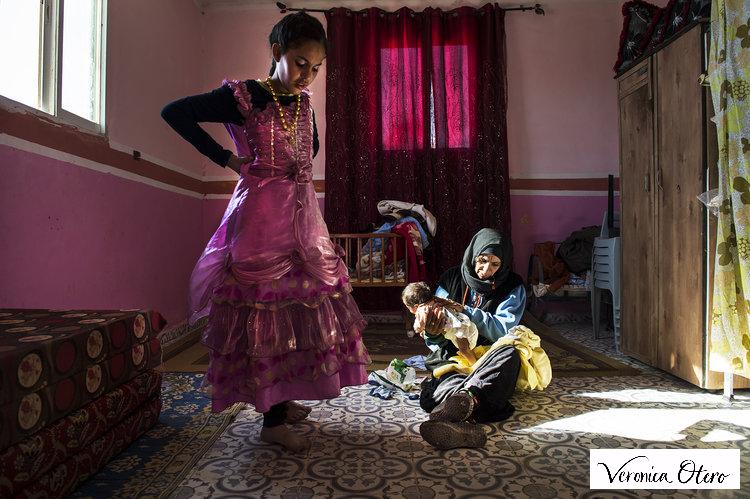
Bedouin of Palestine: People of the Desert. The Rashaydeh family.Nejah is in a party dress, whilst her stepmother Nadah changing the nappy of her premature grandson, Abdallah. The baby will be wrapped in several cloths and tied with a string of scraps of fabrics, to keep him warm. All family members help in the raising of the children. Bedouins have one of the highest fertility rate in the world.
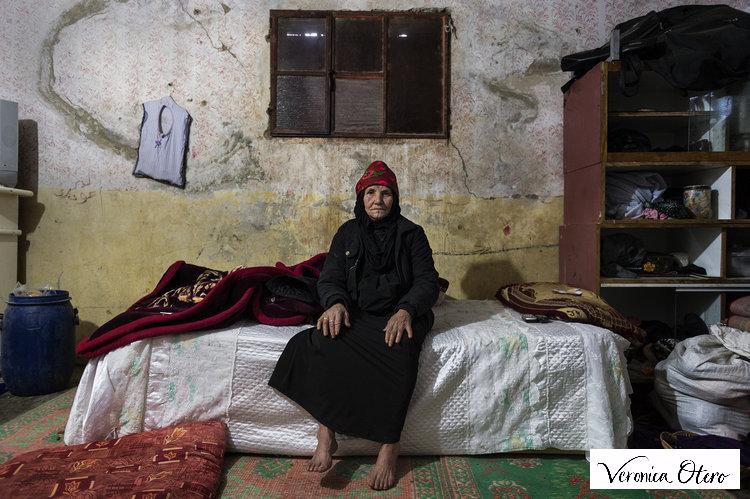
Bedouin of Palestine: People of the Desert. The Rashaydeh family.Grandmother, Sheikha Mohammad Ahmad Rashaydeh, is a refugee originally from Ein Gedi. She was arrested and imprisoned by Israeli Authorities, for participating in Fatah guerrillas, after the Israeli occupation of South Lebanon, in 1985 and was released in 1994,. She recalls these events portraying herself as a warrior lighting candles in the desert to help rebel fighters to find spots where women were preparing food during. She has tribal markings on her face, placed on both her cheeks, forehead and between the lips and chin. These tattoos signify the sanctity of history and are endowed with a certain beautification. It is very unlikely nowadays to find women less than 50 years of age with these marks.
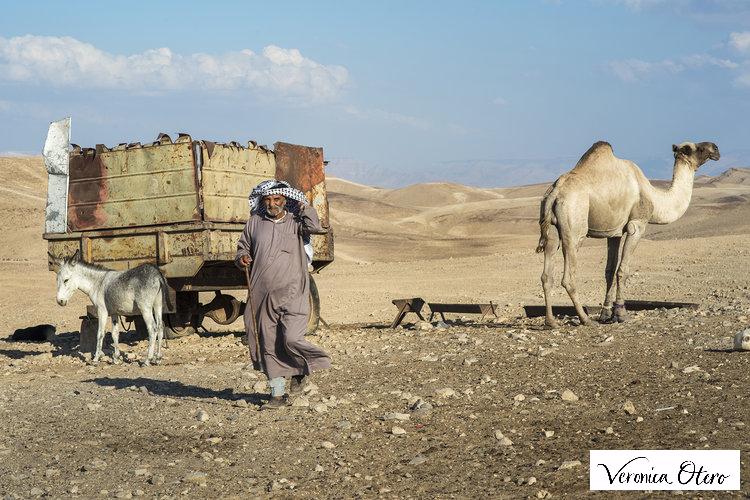
Bedouin of Palestine: People of the Desert. The Rashaydeh family.The oldest member of the tribe, Sheikh Abu-Hussein Yussef Rashaydeh, born in 1937. He still lives as his ancestors did, and drinks camel milk daily, which is considered to have healing properties. He has two wives and 14 kids, among them Abu Ishmael Mohammed, Nisreen and Tahane. The name Sheikh refers to a wise, respected old person. He is one of the members of the Bedouin court, where the elderly is selected by the community, on the basis of their wisdom, to solve problems within the tribes.
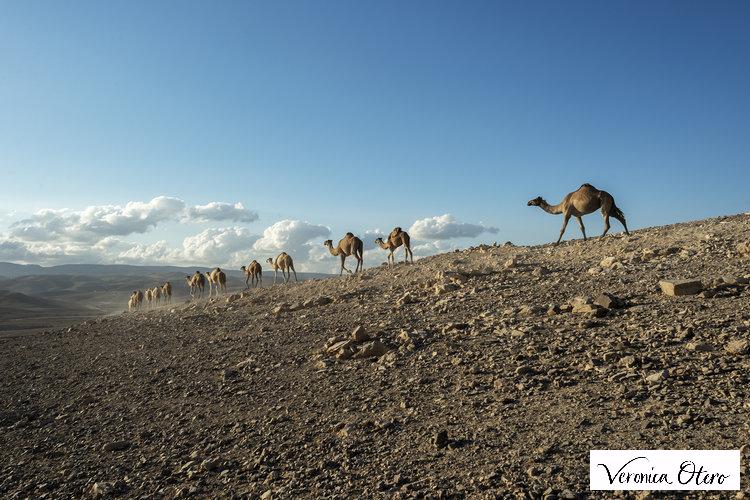
Bedouin of Palestine: People of the Desert. The Rashaydeh family.Camels travelling through the desert at sunset. Bedouin economy is highly dependent on camels, but their use as a medium for transport have been replaced by Jeeps. Each night, when the temperatures drop, camels return to their owner.
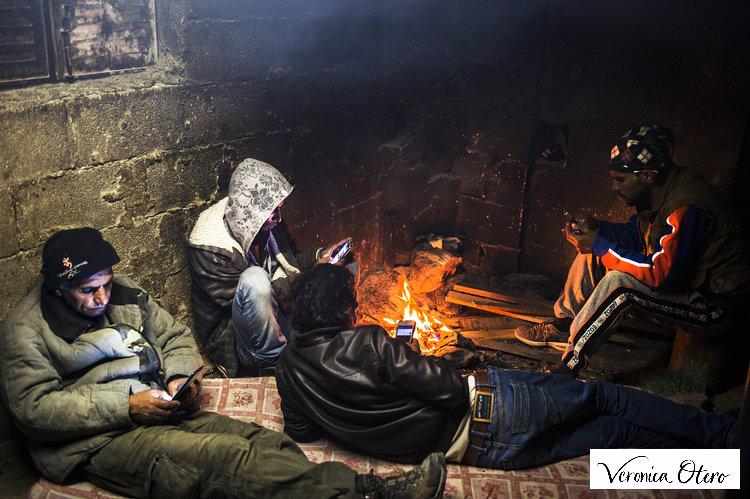
Bedouin of Palestine: People of the Desert. The Rashaydeh family.Abu Ishmael Muhammad, and his sons checking their Facebook, they are quite active in online social platforms. Even though there is no telecommunication network in the village, internet connection is possible in the area because of the altitude of the village, it situation facing Jerusalem and proximity to settlements. Many Bedouins carry two phones, with different companies, one Israeli and another Palestinian, to be able to get signal in the cities and the remote places of the desert.
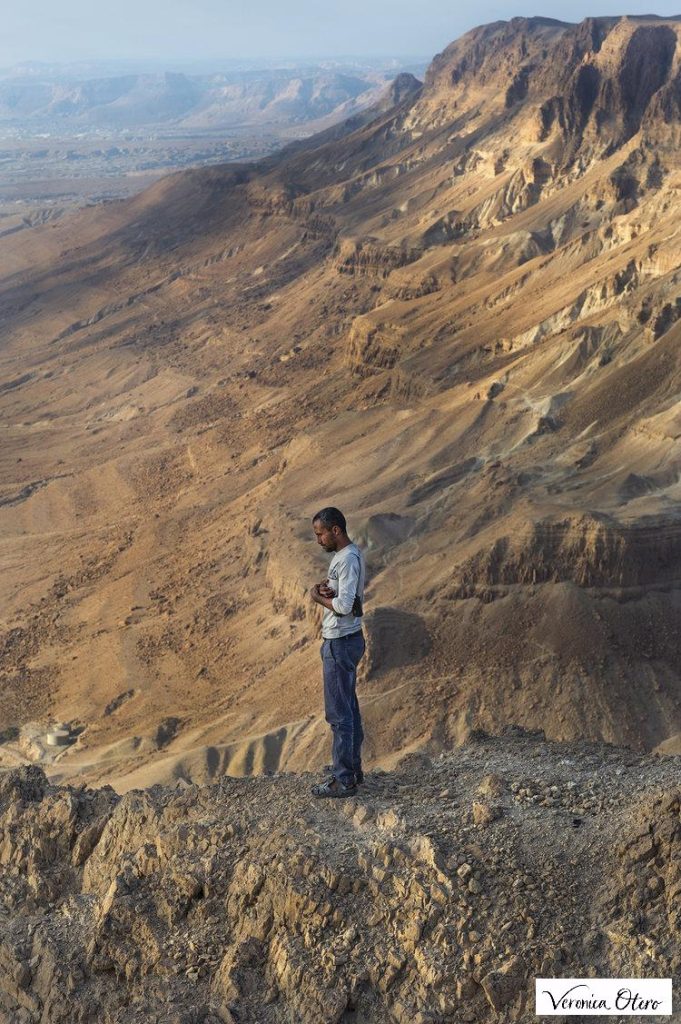
Bedouin of Palestine: People of the Desert. The Rashaydeh family.Atef (32) is a father of five and the brother of Abu Ishmael’s second wife. He is a camel herder and co-works as a tourist guide with the family. He often sleeps outdoor on a hill overlooking the Dead Sea. He feels that the village is too busy and noisy and finds peace and tranquility out in the desert.