Guest Post:
‘Brave wanderers’: introducing the Gujarati Yatra Archive.
By Helen King.
(PhD Researcher with the Northern Bridge Consortium Doctoral Training Partnership based at Newcastle University.)
‘Yatra’ means ‘journey’ in Sanskrit. It is word that conjures not only the many physical journeys across continents taken by members of the Gujarati diaspora, but the spiritual journey of a people who find their homes in many places. Jaffer Kapasi, a Gujarati businessman whose oral history is one of many in the Gujarati Yatra collection, held in the UEL archives, says that his journey made him ‘start thinking globally’ (2.14.50-2.14.52), and this sense of global identity is shared by many of those whose testimonies were collected as part of the Gujarati Yatra project in 2017.
Originally collected by community activist Lata Desai and ethnomusicologist and oral historian Rolf Killius, the oral histories now stored by the Living Refugee Archive formed part of the exhibition ‘Gujarati Yatra – Journey of a People’ held at the Museum of Croydon 2017-18. The exhibition was inspired and enabled by Subrang Arts, a UK charity dedicated to the promotion and development of the arts and culture of the Indian Sub-continent. Oral history is interested in personal, specific and unique accounts of history that are only found in the memories of those who lived through it. It has existed as a field of research since the mid-20th century, often capturing local, minority, folk or labour histories. The aim of the oral historian is to preserve the story and memories of an individual for posterity. The Living Refugee Archive holds a treasure trove of oral histories, and over the coming weeks I will be highlighting some insights from the Gujarati Yatra archive.
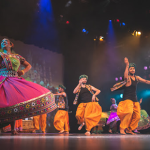
Image courtesy of Subrang Arts.
With a long history of migration in and out of the region, Gujarat, the large state on the Western coast of India, has long been ‘both linguistically and religiously heterogeneous’ (Parmar, 5). The region has a long history of trade, and there were a significant number of Gujaratis, estimated to be around 1200, in East Africa before the large numbers travelled in the 1890s to serve the needs of the British Empire (Parmar). Many were indentured labourers, and many were migrants fleeing economic hardship and famine in the region. In his testimony, lawyer Mohamed Keshavjee quotes the proverb: ‘it is better to go to Africa and die when death calls you, than to stay in Gujarat and die an unwarranted death’ (5.29-5.39).
By the beginning of the 20th century, there were well established Gujarati communities in Uganda, Kenya, South Africa and Tanzania, as well as in the Caribbean. Indians in South Africa were segregated together as part of apartheid, and society in Kenya and Uganda operated in a three-tier system, made up of the white British ruling class, the Indians, who were often involved in trade, and the Africans, who were treated as a servant class. Tanzania gained independence from British colonial rule in 1961, followed by Uganda in 1962 and Kenya in 1963. Whilst large numbers of Gujaratis left Kenya and Tanzania in the decade that followed due to economic and political upheaval, all Indians were forcibly expelled from Uganda in 1972 by Idi Amin.

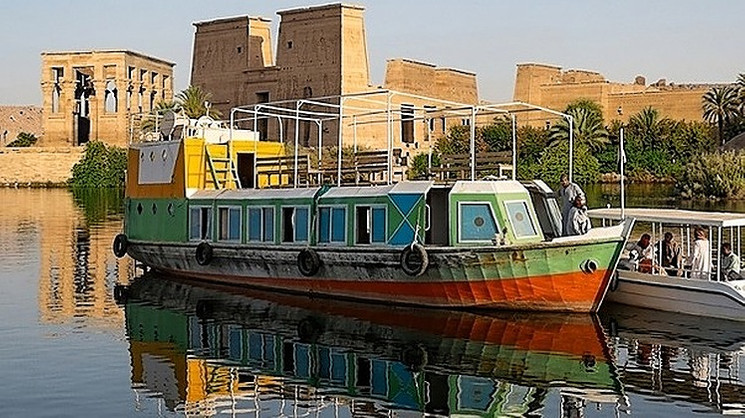
A traditional dhow, the boats used to travel across the Indian Ocean. World History Encyclopaedia.
Jaffer Kapasi describes his own experience of the ‘Ugandan exodus’ as a young man. Accusing Indians of depleting the Uganda economy and robbing Africans of opportunities, Amin gave the Indians 90 days to leave. Kapasi’s family were some of the last to leave the country and were kept safe from being looted by Amin’s soldiers on the journey by a roadblock guard who knew them and agreed to travel with them. Other families were not as lucky, and he describes the ‘many horror stories’ (55.01-55.03) of others. He describes a common scenario in which soldiers ‘were showing guns on their neck, and all the women and all the children were thrown out of their vehicle and then they were looted, everything good was taken away from them (55.06-55.19).

Diwali in Leicester, home to one of the largest Gujarati communities in the UK. Leicester City Council.
Like many of the 28,000 Ugandan Indians who came to the UK in 1972, Kapasi and his family were housed in army barracks upon their arrival. He describes the stark contrast between the UK they had imagined, a ‘land of milk and honey’, and the reality of small, terraced houses with a toilet in the back yard (1.31.05-1.31.07). There were many difficulties for those coming from all over East Africa. Mohamed Keshavjee describes feeling ‘lonely’ during his time at law school in the late 60’s (1.22.28), and Vibhaker Baxi, director of Navras records, explains the racism of the job market when he finished his MBA in the 1970’s: ‘You would just not get called for interviews. And when you did get called for interviews, the same question would arise about your origin and how that would not be easy’ (11.12-11.20) Nevertheless, many of the participants in the Gujarati Yatra project describe Britain as their home, feeling a deep affinity with the country and a gratitude for the opportunities it has offered them. Teacher and activist Nirinjana Desai, who came to the UK from Kenya in the early 60s, says that ‘after many years in this country, this is my country. I feel for Britain, if anything happens over here I literally cry’ (38.35-38.44). As well as making their homes in the UK, the people of the ‘double diaspora’ have contributed hugely to the economy and culture of the country in the last five decades (Parmar).
In his essay in The Good Immigrant, British Gujarati writer Vinay Patel calls the people of the diaspora ‘brave wanderers’, describing the journeys made by his parents and grandparents: ‘Asia. Africa. Europe. Every continent we’ve been through has left its mark on us’ (222). This sense of being marked by the places one has travelled through is echoed my many of the accounts in the Gujarati Yatra collection. Over the coming weeks, I will be sharing some of the stories of these ‘brave wanderers’ on the LRA blog, highlighting this fascinating archive, and the important contributions made by the people of the ‘double diaspora’ to British life and culture.
Bibliography
Baxi, Vibhaker. “Vibhaker Baxi oral history interview conducted by Lata Desai and Rolf Killius in London, UK, 14/3/2017”. UEL Archives and Collections, Gujarati Yatra Collection. Accessed 24th Nov 2021.
Desai, Nirinjana. “Nirinjana Desai oral history interview conducted by Lata Desai and Rolf Killius in London, UK, 2/4/2017”. UEL Archives and Collections, Gujarati Yatra Collection. Accessed 24th Nov 2021.
Kapasi, Jaffer. “Jaffer Kapasi oral history interview conducted by Lata Desai and Rolf Killius in London, UK, 8/4/2017”. UEL Archives and Collections, Gujarati Yatra Collection. Accessed 11th Dec 2021.
Keshavjee, Mohamed. “Mohamed Keshavjee oral history interview conducted by Lata Desai and Rolf Killius in London, UK, 24/03/2017”. UEL Archives and Collections, Gujarati Yatra Collection. Accessed 24th Nov 2021.
Parmar, Maya. Reading Cultural Representations of the Double Diaspora: Britain, East Africa, Gujarat. Springer International Publishing, 2019.
Patel, Vinay. ‘Death is a Many-Headed Monster’, The Good Immigrant, ed. Nikesh Shukla. Unbound, 2016.
The history of oral history. Oral History Society, https://www.ohs.org.uk/about-2/. Accessed 24th Nov 2021.
Fleeing Idi Amin: the long journey to a new life. History Extra, https://www.historyextra.com/period/20th-century/fleeing-idi-amin-after-uganda-asian-expulsion-arrival-britain/. Accessed 24th Nov 2021.
LRA Blog Disclaimer
The views expressed on this blog are attributable to their individual authors writing in their personal capacity only, and not to any other author, the editors, or any other person, organization or institution with which the author might be affiliated unless explicitly stated so.