Spring Update on the Living Refugee Archive – Part One
In the first of several new blog posts, we will be providing updates on the work we have been undertaking in conjunction with the Living Refugee Archives and also physical Refugee Archives situated at the University of East London.
Introduction
We know it has been a while since we have posted an update on work with the Living Refugee Archive and also our Refugee Archives at the University of East London. It has been a challenging few months for us as the Living Refugee Archive with both work and Covid related issues to contend with. However, as we now slowly edge towards the end of winter and the beginning of spring here, it is always reassuring the see the first daffodil buds starting to blossom, we are now in position to be able to reflect on our work with the Living Refugee Archive and to update you are readers on the projects and activities we are currently working on. The current conflict in Ukraine continues to cast a dark shadow, and we must continue to show solidarity with all displaced peoples across the world.
For ease of reading we will be splitting this update into two blog posts.

Brief Recap of 2021
Our work during 2021 was of course impacted by the ongoing implications of the Covid-19 pandemic. This saw our physical refugee archives at the University of East London being closed for 18 months as we worked from home during the pandemic, although we have gradually been able to return to the Archive in the second half of 2021, although of course there is much work still to be done in terms of catching up on work that needs to be done with our physical archival collections.
Throughout 2021 we were able to continue to work on our civic engagement and community outreach work. During the year we were able to present details of our ongoing work with the Living Refugee Archive as a number of virtual conferences and community events including presenting on different aspects of our archival work relating to documenting the lived experiences if displacement, oral history and community engagement activities.
We would like to thank the conference and event organisers for enabling us to be able to present at the following conferences and workshops during 2021:
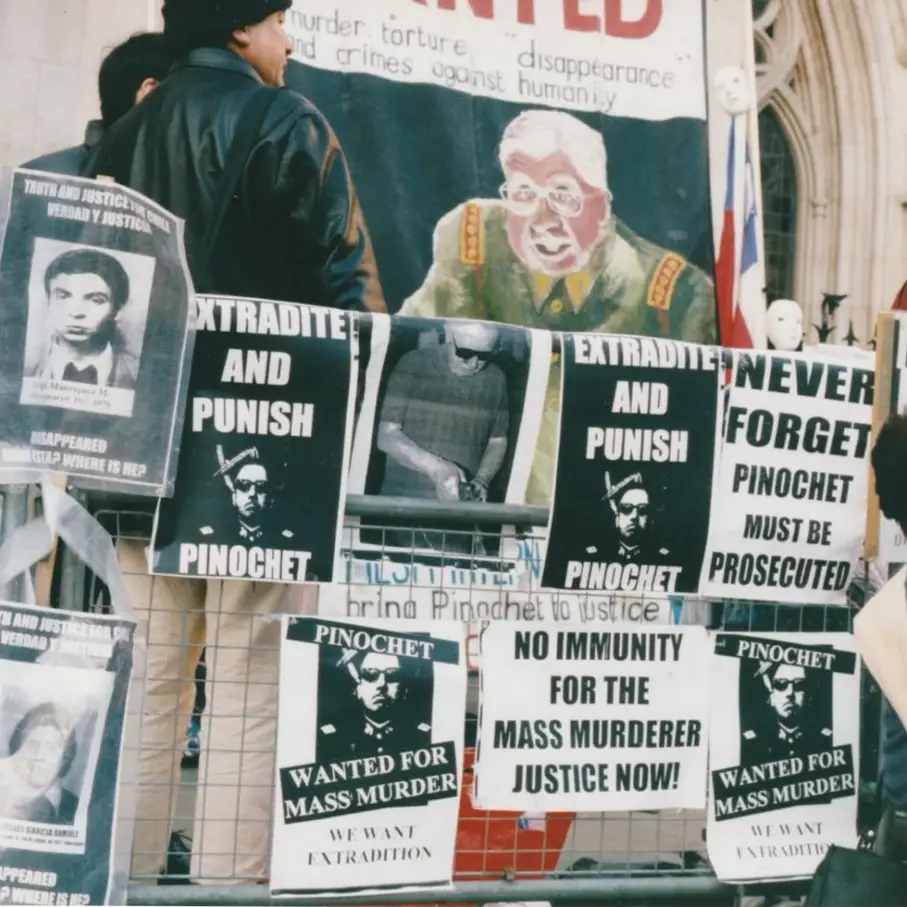
- We were able to present papers on our work with the Chilean diaspora communities in the United Kingdom at the 31st Conference “International Archival Day” 2021 hosted by the International Institute for the archival science Trieste/Italy – Maribor/Slovenia on Monday, 29th November 2021.
- This followed the launch of our Crafting Resistance: The Art of Chilean Political Prisoners Virtual Exhibition at the International Association for the Study of Forced Migration (IASFM) conference held virtually between Monday, 26th July to Friday, 30th July 2021. http://iasfm.org/iasfm18/ The Crafting Resistance exhibition was a re-imagining of the original exhibition that we held in-person at the Refugee Archives at the University of East London between 26 January, 2018 and the 16 February, 2018[i].
- This virtual exhibition at IASFM18 formed part of a wider series of activities that we had organised as part of our IASFM Working Group on the History of Forced Migration and Refugees: An International Working Group for Archiving and Documentation, co-convened by Dr. Rumana Hashem and myself. These included two back to back workshops on Activism, Forced Migration and Archivism, led by Dr. Mirjam Twight (University of Oslo), and Paul Dudman (UEL) and a panel session on Ethics and Feminist Methodologies in Contexts of Border Struggles of Women and LGBTQI with Displacement Panel with presentations from HFMR members Dr. Veronica Saba (University of Trieste), Nithya Rajan (University of Minnesota), Dr. Rumana Hashem (HFMR Co-Convenor), and chaired by Dr. Stavroula Tsirogianni (Chinese University of Hong Kong, Shenzen).
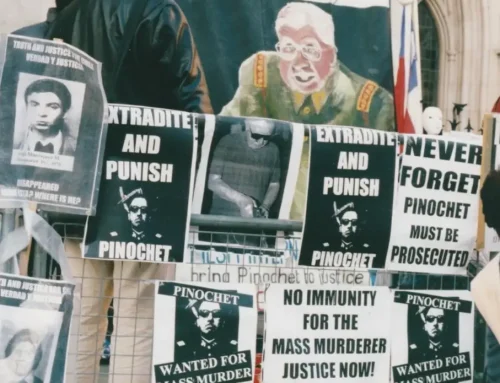
[i] The exhibition was co-curated by Jasmine Gideon, Birkbeck, University of London, and Gloria Miqueles, a Chilean ex-political prisoner. Crafting Resistance challenged the idea of political prisoners as ‘passive victims’ which fails to recognise the degree of agency many prisoners retain despite the horrific circumstances they endure. During the military dictatorship of General Pinochet in Chile (1973-1990) hundreds of political prisoners were held in concentration camps throughout the country. In a number of these camps, prisoners organised themselves and crafted items from the very limited materials and improvised tools available to them. The exhibition brought together a collection of these artefacts and reflected on their importance in relation to sustaining the mental health and wellbeing of those incarcerated. These artefacts are now testimony to the mental endurance of all those who were political prisoners under the Pinochet regime.
4. We also ventured into the world of podcasts with LRA co-convenor Paul Dudman being invited by the History Workshop Online to be part of a podcast on Creating Refugee Archives alongside historians Peter Gatrell and Mezna Qato, and with Heather Faulkner who is Senior Archivist at the UNHCR. This proved to be a very interesting discussion of the importance of archives for the writing of refugee history and to consider the key question of `how can historians best document, preserve, and make accessible the voices and artifacts of refugee and migration experience?’ The discussion was facilitated by Ria Kapoor and can be accessed via the HWO website at https://www.historyworkshop.org.uk/creating-refugee-archives/.
5. In other events, we discussed our oral history work at the ARA South East Webinar on `History’s not always written down: Tips for running an oral history project’ virtual workshop on the 4th November, 2021.
6. We also presented a paper on the role and importance of theatre as a medium for representing narratives at the International Federation for Theatre Research Conference during July, 2021.
7. We were also honoured to be invited to speak about our work at the Archiving the 8th workshop hosted virtually by the University College Dublin School of Art History and Cultural Policy on the 8th June 2021 and also the Recording it Ourselves: DIY Cultures, Information, Archives and Histories virtual event on the 20th March, 2021.
We were also able to collaborate with two amazing Guest Editors for two issues of our Displaced Voices: A Journal of Archives, Migration and Cultural Heritage publication during 2021. Our Winter 2021 edition (Volume 1 Issue 2) was a Special Issue guest edited by Kiran Kaur, entitled: In Their Own Voices: Making Visible Lives of Refugee Women In Kuala Lumpur. In this volume, Kiran Kaur worked closely with contributors to explore issues faced by refugee women based in Kuala Lumpur, Malaysia, and to consider what inclusive publishing might look like and rather than speak for refugee communities, we can instead speak together. The volume also includes a contribution by photographer Amin Kamrani, which is visual piece that aims to highlight the spaces, actions and voices of refugee communities without emphasizing a victimhood narrative or imagery, and which also relates to Amin’s 20/20 Virtual Exhibition on the Living Refugee Archive. All contributors to this project were participants in a doctoral participatory action research (PAR) project in Kuala Lumpur, Malaysia.
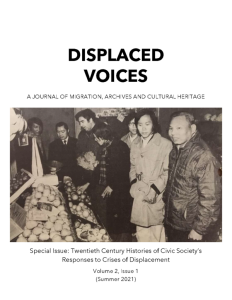
Our second volume of the journal Displaced Voices: A Journal of Archives, Migration and Cultural Heritage which has just published on the Living Refugee Archive. This issue which was Guest Edited by Dr. Anna Maguire is on the theme of Twentieth Century Histories of Civic Society Responses to Crises of Displacement: A Special Issue of Displaced Voices to Mark the 70th Anniversary of the Refugee Council.
The link to Displaced Voices current issue is available here: https://www.livingrefugeearchive.org/displaced-voices-volume-2-issue-1-summer-2021/