A Reflection on the Recent Guest Posts on the Living Refugee Archive by Helen King and Akinpelu Funmilayo
By Paul V Dudman.
This blog for the Living Refugee Archive in response to the recent Guest Postings by Helen King and Funmi has taken a lot longer to see the light of day than I had initially hoped for. The reasons for this I think are symbolic of the challenges we have faced with coming to terms with the new pandemic world and the adjustments we are all coming to terms with of managing archival collections and our own wellbeing in an increasingly hybrid world.
Late Spring and early Summer here with our physical archives housed at the University of East London and our physical collections we are developing with the Living Refugee Archive have seen significant developments. The arrival of the Association of Ukrainian Women physical archive (in excess of 70 boxes), a project delayed two years by the Covid-19 pandemic, has taken on an even more poignant turn with the advent of the ongoing conflict between Russia and Ukraine. What began as a project looking to preserve an important collection documenting the experiences of Ukrainian women and their coming together to form an Association to enable and support mutual wellbeing post World War II to thinking about how we undertake a contemporary collecting project to record the ongoing conflict in Ukraine and the impact this has on communities in Ukraine alongside the Ukrainian communities in the diaspora.
We are also very pleased to have been able to formalise a connection with the Qiestna community organisation (https://www.qisetna.com) who focus on the documenting and recording of Syrian cultural heritage. This will form an ongoing digital engagement project with the Living Refugee Archive exploring who we can document, preserve and continue to make accessible the important stories and narratives that continue to be made available on the Qiestna website.


We have also been busy with our British Olympic Association Archive at the UEL Archives, especially as it is the tenth anniversary of the London 2012 Olympic Games this summer. Where does the time go? It only seems lie yesterday that UEL was preparing to host Team USA at the UEL Docklands Campus and our new purpose built SportsDock (Team USA kindly funded the Gym Equipment which stayed on after the Olympic Games finished) alongside the TeamGB Medical Team. This was also a milestone for me as whilst the Olympic Games in Stratford were taking place, I was presenting my very first international conference paper at the Society of American Archivists Border Borders annual conference in San Diego, USA in August 2012. Our panel was on the Saturday morning of the Conference as Session 509 and entitled: Beyond Resettlement: Overcoming Hurdles to Document the Experiences and Contributions of Refugees. In my paper, I chose to focus on our work with the Refugee Council Archive over the first ten years of preserving and making the collection accessible.
It is interesting in retrospect that two of my fellow speakers that day presented their archival engagement work with Vietnamese and Southeast Asian communities in the USA. Christina Woo (University of California, Irvine) focused her talk on `Archive to the People: Taking Materials from the Southeast Asian Archive to the Community’; whilst Thúy Võ Dăng (University of California, Irvine, Department of Asian American Studies) focused on `Resisting Historical Erasure: Oral History and Out-reach in the Vietnamese American Community.’ A decade later we are working with Vietnamese performance artist Moi Tran on her projects with the Civic Sounds Archive documenting the experiences of the Vietnamese and Southeast Asian communities in the London Borough of Hackney, a topic which intrigued Funmi and let her to interview Moi for her second blog post here on the Living Refugee Archive.
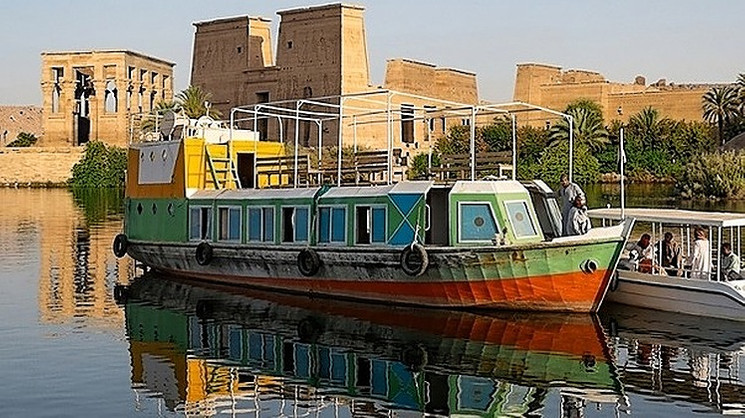
For her virtual internship with the Living Refugee Archive, Helen King, a PhD researcher at the University of Newcastle, chose to focus on the Gujarati Yatra oral history archive. This is a collection of oral histories collected as a part of the `Gujarati Yatra: Journey of a People’ exhibition by Lata Dasai (Subrung Arts) and Rolf Killius hosted by the Museum of Croydon in 2017/2018.
Early in her first blog posting, ‘Brave wanderers’: introducing the Gujarati Yatra Archive, King reflects that “oral history is interested in personal, specific and unique accounts of history that are found in the memories of those who have lived through it.” Over the course of her three blog articles, King considers the nature of the double migration of Gujaratis, first to East Africa in the 1890s and later their onwards migration to the UK, often born out of economic and political upheaval. The term `twice migrants’ gradually came to be used to represent the those from South Asian communities, predominantly Gujarati and Punjabi, who had been forced to migrate to the United Kingdom from countries outside of Asia. Often as a consequence of the “Africanization” policies undertaken by countries in East Africa following independence from British colonial rule. In the case of Kenya, Gujarati communities in the country were given two years to convert to Kenyan citizenship following Kenya’s independence from Britain in 1963. Whilst there was a limited take-up, many Gujaratis chose not to, often due to the restrictive new legislation being introduced by countries including Kenya post-independence which effectively restricted “the choice of residence, trade and employment for non-citizens.” (Twice migrants: African Asian migration to the UK | Striking Women, no date).
Gujaratis were also required to leave Tanzania following their independence in 1961, a journey that was to lead to the expulsion of all of the Ugandan Asians by Idi Amin in 1972, a situation that would help to shape and define the United Kingdom’s resettlement policies towards refugees and displaced persons. King highlights the experiences recited by Jaffer Kapasi, whose first-hand accounts of his family’s enforced departure from Uganda included stories of looting at the border and the loss of their intangible cultural heritage. “He describes a common scenario in which soldiers ‘were showing guns on their neck, and all the women and all the children were thrown out of their vehicle and then they were looted, everything good was taken away from them (55.06-55.19).” (Jaffer Kapasi quoted in King, 2022).
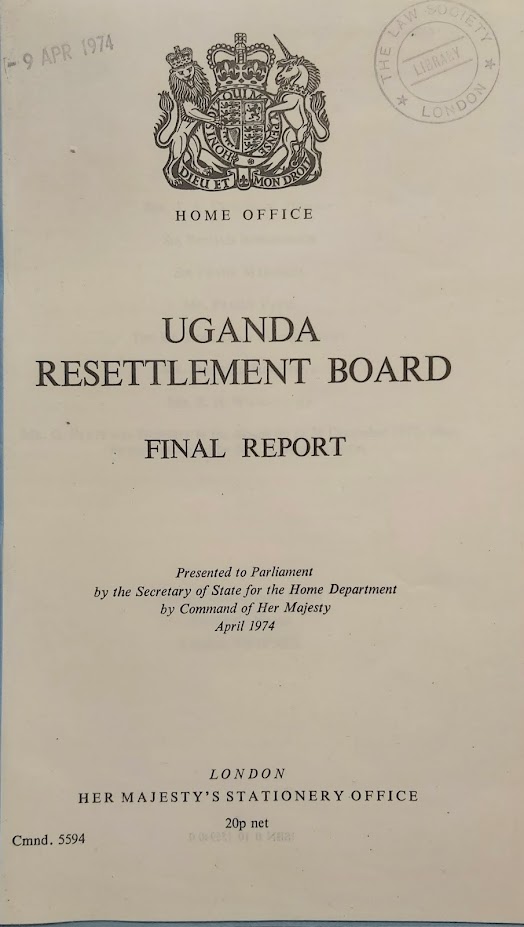
The Uganda Resettlement Board had been established by appointment from the Home Secretary in 1972 to help assist in the resettlement of UK passport holders in response the expulsion. Further details and archival materials on the Uganda Resettlement Board are accessible from The National Archives covering 96 boxes from the period 1972-1976, encompassing minutes, correspondence and papers (‘Uganda Resettlement Board: Minutes and Papers’, 1972). The Board were subsequently given the responsibility of the 16 camps allocated as temporary housing for the Ugandan Asians on their arrival into the UK. This included a total of 14 service camps alongside a Department of Health and Social Security sanitorium and a student hostel. Examples of these Camps included Greenham Common in Newbury, Berkshire; Heathfield Camp in Honiton, Devon and Houndstone Camp in Yeovil, Somerset. (Ugandan Asians’ Accomodation (Hansard, 10 June 1974), no date). Indeed, on their arrival in the United Kingdom, Jaffer Kapasi and his family were housed in military barracks when they arrived in the United Kingdom, being transferred firstly “to Lingfield army barracks, and then on to an army barracks in Wales.” (King, 2022c).

The use of military barracks for the housing of refugees and asylum seekers in the United Kingdom has a much longer history than many people release, and challenges many of the established narratives of the UK being a welcoming country for those seeking refuge. The latest controversy of British Government proposals to house up to 30,000 asylum seekers in ex-military bases across the country, including the former RAF base in Linton-on-Ouse which has be dubbed by campaigners as Guantanamo-on-Ouse (Hymas, 2022c) as a cheaper means of accommodation compared with the existing use of hotel accommodation and an “alternative to the purpose-built asylum reception centres originally envisaged by Priti Patel” (Hymas, 2022b) which were reportedly “vetoed by Rushi Sunak.” (Hymas, 2022b). This proposal was originally announced alongside the plans to establish an off-shore processing centre in Rwanda, a policy itself described by the Chief Executive of the Refugee Council, Envar Soloman as : “It’s a draconian move that shows a complete lack of care and compassion (Diver, 2022) for people who, through no fault of their own, have had to escape their homelands.” (Hymas, 2022a)
This follows the extensive controversy following the use of Napier Barracks in Fokestone, Kent and the Penally Camp in Wales as temporary accommodation for asylum seekers. Both sites had been used as contingency or temporary accommodation for asylum seekers once they had arrived in the United Kingdom and were waiting their asylum claims to be processed by the UK Home Office. The accommodation facilities were below standard even before the onset of the Covid-19 pandemic, which only acted to make an already difficult situation even more unbearable. Substantial newspaper(Amnesty International, and Khan, 2021; Drummond, 2021a, 2021b; Higginson, 2021; Asylum seekers win High Court challenge over ‘squalid’ Napier Barracks, no date; Napier Barracks: Outrage over decision to keep ‘unfit’ and ‘squalid’ refugee camp open until 2025 – Kent Live, no date) and campaigns(Bail for Immigration Detainees, 2021; Ben and Jerry’s, 2021; Ask your MP to tell Priti Patel: #CloseTheBarracks now!, no date) highlighted the poor conditions at both camps, including poor sanitary conditions, overcrowding (leading to a Covid-19 outbreak) and the mental health of the asylum seekers being adversely affected. Subsequently, a claim was brought to the High Court by six asylum seekers, all of whom had been housed in Napier between September 2000 and February 2001. In their judgement released on the 3rd June 2001, the High Court found that “Napier Barracks provided inadequate accommodation for asylum seekers, that the Defendant’s process for selecting people to be accommodated at the Barracks was flawed and unlawful, and that residents were unlawfully detained under purported Covid rules.” (‘High Court finds decision to house asylum seekers at military barracks unlawful’, 2021).
There was substantive criticism (Amnesty International, and Khan, 2021; Bail for Immigration Detainees, 2021; Ben and Jerry’s, 2021; Joint Council for the Welfare of Immigrants, 2021; Liberty, 2021; Refugee Action, no date) the Government’s use the Napier and Penally Barracks in Wales, since closed, as temporary accommodation both by external welfare organisations and through official reports by the Independent Chief Inspectors of Borders and Immigration and the HM Inspectorate of Prisons (Neal, and Independent Chief Inspector of Borders and Immigration, 2021). However, this did not deter the Government from extending the use of Napier as a temporary accommodation for asylum seekers until 1st September 2026 under the provisions of the Town and Country Planning (Napier Barracks) Special Development Order 2001 (SI 2021/962). Article 4 of the Order “grants planning provision for development consisting of a change of use of Napier Barracks to use for the provision of facilities, support or accommodation to certain asylum seekers or failed asylum seekers together with their dependents.” (Tobin, 2022). In recent writings, both Becky Taylor (2021) and Jordanna Bailkin (2018) reflect on the use of military barracks as de facto refugee camps as “a forgotten site of British history.” (European Council on Refugees and Exiles, 2018). The use of such camps for housing refugees and asylum seekers alongside the acts of resistance and agency resulting from often poor quality accommodation have generated, have often been over-looked in favour of the more widely-documented narrative supporting Britain’s perceived approach of being welcoming to those in need of asylum. Taylor has highlighted how, prior to the opening of the Harmondsworth Detention Centre near Heathrow Airport in 1970, which foreshadowed the move towards wider detention-focused Government policies for accommodating asylum seekers, “the three big resettlement programmes for refugees to Britain saw the extensive use of military facilities to house the arrivals – Hungarians fleeing Soviet invasion in 1956; Ugandan Asians expellees from Idi Amin’s Uganda in 1972; and the arrival of the Vietnamese `boat people’ following the UNHCR-sponsored programme after 1979.” (Taylor, 2021). As with Napier and Penally, there were only meant to be temporary accommodation options. The continued use of military barracks as an option for the temporary accommodation of asylum seekers is part of a much longer narrative and “is a much more readily forgotten part of the story” (European Council on Refugees and Exiles, 2018) and maybe indicates an approach which foreshadows the current “hostile environment” approach favoured by the current Conservative Government.
In her second blog posting, Bhradra Vadgama and Niranjana Desai: a moment in multicultural education , Helen King focuses on the role of identity in relation to place and the importance of language in supporting the adaptation process for Gujaratis arriving in the United Kingdom.
“Localising one’s identity in relation to place is a complex thing.” (King, 2022a). In her engagement with the oral history by Niranjana Desai, King chooses to highlight the importance and the role of language in helping individuals to be connected with their own commutes. Bheidra Vadgama …. “I am more rooted because my Gujarati is so good.” (1.12.15 – 1.12.19). (King, 2022a).
The role and importance of voice was an important point for Akinpelu Funmilayo in her first guest post entitled, Harnessing the Power of Collaboration in Refugee Studies: the Example of Displaced Voice II. The second issue of our open access journal Displaced Voices: A Journal of Archives, Migration and Cultural Heritage was guest edited by Kiran Kaur and focused on refugees in Malaysia. The special issue was entitled In Their Own Voices: Making Visible Lives of Refugee Women In Kuala Lumpur, which focused on co-authorship with displaced persons in the City to provide an open, accessible and safe space for authors to be able write and share the stories they that wanted to tell, in their own words.
In terms of the tole and importance, and reflecting on the journal, Funmilayo reflects:
“It is why such typical issues as fragile and fluid as migration, refugeeism, and displaced mobility pose as complex dialetics that are perceived and constructed differently and do not give room for a commonly shared understanding. For this reason, the narrativization of migrant and refugee issues have always been met with discordant contradictions, contestations, and conflicted ideologies.” (Funmilayo, 2022). This highlights many of the concerns and challenges we have tried to respond too in almost twenty years of working with archival collections which focus on refugee and forced migration issues. How do we ethically engage directly with communities and individuals who have experienced exile and displacement, encouraging bottom-up participatory forms of engagement whilst ensuring what we archived is representative and “Undersores the importance of borrowing the lens of directly affected people when speaking on such issues as refugitude.” (Funmilayo, 2022).
When looking to preserve these narratives for the future, we must always continue to endeavour to consider the role we play as archivists and curators of the archives within our care, to always be considerate of whose voices are being heard within our collections, and equally are their voices who are being excluded, and how are our acts of curation conveying and transmitting the stories we are representing. In the case of displaced narratives, Funimilayo reminds us continuingly to:
“Challenge the existing stereotype that refugees need to have their stories told on their behalf because they just cannot do it by themselves.” (2022).
We need to be continuously reflecting on our own practice to reflect on how our curation represents the narratives within our collection, and to ensure that we continue to strive towards encouraging participation in our archiving work and to engage with communities and individuals, to help enable self-representation of their narratives in terms of both content and form. Ideas of how we might consider the disruption of traditional archival paradigms to help facilitate active community engagement with our collections is something we will discuss in the next blog post when we talk more in depth about our work with performance artist Moi Tran and the Civic Sounds Archive. The importance of silences within the archive is also often overlooked. For one, anonymity and non-anonymity are also modes of telling, and to allow one or the other is to subscribe to a choice to or to not tell the face as well as the story.
In her third blog article, Leicester’s Gujarati Influence, King focuses on the city of Leicester which has a strong Gujarati community and which is also one of the most ethnically diverse cities in the UK. The movement of Kenyan Asians into the city began during the 1960’s due to Africanisation in Kenya followed by the arrival of the Ugandan Asians in 1972. Initial hostilities by the City to the arrival of the Ugandan Asians, and early experiences of poor housing and racism within the city alongside limited employment opportunities.
The now infamous notice taken out by Leicester City Council in the Ugandan Argus newspaper in 1972 to advise Ugandans thinking of travelling to Leicester that “in your own interests and those of your family, you should … not come to Leicester,” (Soni, 2013), arguing that “conditions in the city are very different from those met by other settlers” (BBC News, 2012) and highlighting apparent waiting lists for housing and education alongside the City’s Social and Health Services being “already stretched to the limit.” (BBC News, 2012). City councillor Sundip Meghani reflected “Part of me wonders whether it was to do with housing, education and resources, or was there an element of racial discrimination towards Ugandan Asians by the city council?” (BBC News, 2012).
The focus on housing, education and healthcare provision reflects how the themes associated with the refugee experience in the UK still grain traction in today’s immigration debates, especially post-Brexit reflected much of the initial climate of hostility which faced the arrival of the Ugandan Asians into the United Kingdom. Former Leicester city councillor Brian Piper, who was elected shortly after the notice was posted, reflects “the excuse the city council leadership used was pressure on services , but the underlying reason was fear of more ethnic minority immigration …. What we describe today as racist.” (BBC News, 2012).
The Ugandan Asians were officially expelled by Ida Amin on the 4th August, 1972. `Those expelled officially became `twice migrants’’ (Van Hear, 2012) after many of them having been brought to East Africa from India by the British during their colonial expansion during the nineteenth century. This year, 2022, marks the 50th anniversary of the forced expulsion of the Ugandan Asians and we are supporting several projects looking to document both the experiences of those who were forced into exile and also the experiences of the volunteers who helped support the Ugandan Asians on their arrival into the United Kingdom. Faith Matters have received funding for a project entitled From East to West which is looking to document the history of the arrival of Ugandan Asians after their expulsion from Uganda in 1972. The project will look to “capture their experiences of settlement between 1972-1974. It will also seek to capture the impacts of the expulsion and resettlement on their mental and emotional well-being.” (Faith Matters, 2022).
The British Ugandan Asians at 50 Project, led by the India Overseas Trust, aims to “capture the recollections of British nationals who volunteered, in many different ways, to assist with the reception of Ugandan Asians during the crucial early months after their arrival in late 1972.” (British Ugandan Asians at 50, 2022). This project will involve both the collection of recorded interviews; a touring exhibition and a series of events alongside the collection of archival materials which will be made accessible through the Living Refugee Archive. The next event will be a Panel Discussion to be held at The National Archives on Saturday, 17th September alongside a presentation of the touring exhibition. Further details are available on the project website at www.bua50.org.


References
Amnesty International, and Khan, J. (2021) Napier Barracks: no place for people seeking asylum. Available at: https://www.amnesty.org.uk/blogs/campaigns-blog/napier-barracks-no-place-people-seeking-asylum (Accessed: 29 July 2022).
Ask your MP to tell Priti Patel: #CloseTheBarracks now! (no date) Freedom from Torture. Available at: https://action.freedomfromtorture.org/close-the-barracks-MP-action-0 (Accessed: 11 March 2021).
Asylum seekers win High Court challenge over ‘squalid’ Napier Barracks (no date) North Wales Chronicle. Available at: https://www.northwaleschronicle.co.uk/news/national/19347232.asylum-seekers-win-high-court-challenge-squalid-napier-barracks/ (Accessed: 4 June 2021).
Bail for Immigration Detainees, (2021) BID responds to the Napier Barracks planning application open consultation, Bail for Immigration Detainees. Available at: https://www.biduk.org/articles/napier (Accessed: 29 July 2022).
Bailkin, J. (2018) Unsettled: refugee camps and the making of multicultural Britain. First edition. Oxford: Oxford University Press.
BBC News (2012) ‘Ugandan Asians advert “foolish”, says Leicester councillor’, 8 August. Available at: https://www.bbc.com/news/uk-england-leicestershire-19165216 (Accessed: 9 April 2022).
Ben and Jerry’s, (2021) Close the Barracks, https://www.benjerry.co.uk. Available at: https://www.benjerry.co.uk/whats-new/2021/01/close-the-barracks (Accessed: 29 July 2022).
British Ugandan Asians at 50, (2022) British Ugandan Asians at 50 Project Update, July 2022., p. 6.
Diver, T. (2022) Rwanda refugee plan is ungodly, says Justin Welby. Available at: https://www.telegraph.co.uk/politics/2022/04/16/rwanda-refugee-plan-ungodly-says-justin-welby/ (Accessed: 29 July 2022).
Drummond, M. (2021a) Home Office resists calls to shut down Napier Barracks despite COVID outbreak, KentLive. Available at: https://www.kentlive.news/news/kent-news/home-office-resists-calls-shut-4909448 (Accessed: 9 March 2021).
Drummond, M. (2021b) Leukaemia sufferer housed at Napier Barracks during Covid outbreak – inspectors. Available at: https://www.standard.co.uk/news/uk/government-choose-love-nhs-kent-home-office-b922200.html (Accessed: 8 March 2021).
European Council on Refugees and Exiles, (2018) Interview: British refugee camps: a forgotten heritage of current relevance. Available at: https://ecre.org/interview-british-refugee-camps-a-forgotten-heritage-of-current-relevance/ (Accessed: 29 July 2022).
Faith Matters, (2022) ‘Vacancy: Social Researcher – “From East to West” Project’, Faith Matters, 11 May. Available at: https://www.faith-matters.org/vacancy-oral-history-project-worker-from-east-to-west-project/ (Accessed: 7 August 2022).
Funmilayo (2022) ‘Harnessing the Power of Collaboration in Refugee Studies’, Living Refugee Archive, 29 April. Available at: https://www.livingrefugeearchive.org/harnessing-the-power-of-collaboration-in-refugee-studies/ (Accessed: 7 August 2022).
Higginson, H. (2021) Why is Napier Barracks still open after a similar camp in Wales was closed?, KentLive. Available at: https://www.kentlive.news/news/kent-news/napier-barracks-still-open-after-5295614 (Accessed: 14 April 2021).
‘High Court finds decision to house asylum seekers at military barracks unlawful’ (2021) DPG Law, 3 June. Available at: https://dpglaw.co.uk/high-court-finds-decision-to-house-asylum-seekers-at-military-barracks-unlawful/ (Accessed: 15 June 2022).
Hymas, C. (2022a) ‘Channel migrants earmarked for one-way ticket to Rwanda put in detention ahead of first deportations’, The Telegraph, 20 May. Available at: https://www.telegraph.co.uk/politics/2022/05/20/channel-migrants-earmarked-one-way-ticket-rwanda-put-detention/ (Accessed: 28 July 2022).
Hymas, C. (2022b) ‘Ex-military bases could house 30,000 Channel migrants and asylum seekers’, The Telegraph, 27 July. Available at: https://www.telegraph.co.uk/news/2022/07/27/ex-military-sites-could-house-30000-channel-migrants-asylum/ (Accessed: 28 July 2022).
Hymas, C. (2022c) ‘Migrant camp delayed after legal action by Tory council’, The Telegraph, 31 May. Available at: https://www.telegraph.co.uk/news/2022/05/31/guantanamo-on-ouse-migrant-camp-delayed-legal-action-tory-council/ (Accessed: 28 July 2022).
King, H. (2022a) ‘Bhradra Vadgama and Niranjana Desai’, Living Refugee Archive, 25 April. Available at: https://www.livingrefugeearchive.org/bhradra-vadgama-and-niranjana-desai/ (Accessed: 7 August 2022).
King, H. (2022b) ‘“Brave wanderers”: introducing the Gujarati Yatra Archive.’, Living Refugee Archive, 20 April. Available at: https://www.livingrefugeearchive.org/guest-post-brave-wanderers-introducing-the-gujarati-yatra-archive-by-helen-king/ (Accessed: 29 July 2022).
King, H. (2022c) ‘Leicester’s Gujarati Inheritance’, Living Refugee Archive, 27 April. Available at: https://www.livingrefugeearchive.org/leicesters-gujarati-inheritance/ (Accessed: 29 July 2022).
Napier Barracks: Outrage over decision to keep ‘unfit’ and ‘squalid’ refugee camp open until 2025 – Kent Live (no date). Available at: https://www.kentlive.news/news/kent-news/napier-barracks-outrage-over-decision-5844323 (Accessed: 6 September 2021).
Soni (2013) Ad that started Leicester’s multicultural evolution, Channel 4 News. Available at: https://www.channel4.com/news/immigration-leicester-ugandan-asians-darshna-soni (Accessed: 9 April 2022).
Taylor, B. (2021) Refugee resistance and the persistence of ‘ingratitude’ – History Workshop. Available at: https://www.historyworkshop.org.uk/refugee-resistance/ (Accessed: 29 July 2022).
Tobin, J. (2022) ‘The use of Napier Barracks to house asylum seekers: regret motion’. Available at: https://lordslibrary.parliament.uk/the-use-of-napier-barracks-to-house-asylum-seekers-regret-motion/ (Accessed: 15 June 2022).
Twice migrants: African Asian migration to the UK | Striking Women (no date). Available at: https://www.striking-women.org/module/map-major-south-asian-migration-flows/twice-migrants-african-asian-migration-uk (Accessed: 9 April 2022).
‘Uganda Resettlement Board: Minutes and Papers’ (1972).
Ugandan Asians’ Accomodation (Hansard, 10 June 1974) (no date). Available at: https://api.parliament.uk/historic-hansard/written-answers/1974/jun/10/ugandan-asians-accommodation (Accessed: 9 April 2022).
Van Hear, N. (2012) Four decades after the expulsion of Ugandan Asians, COMPAS. Available at: https://www.compas.ox.ac.uk/2012/four-decades-after-the-expulsion-of-ugandan-asians/ (Accessed: 9 April 2022).
LRA Blog Disclaimer
The views expressed on this blog are attributable to their individual authors writing in their personal capacity only, and not to any other author, the editors, or any other person, organisation or institution with which the author might be affiliated unless explicitly stated so.