Mayapi Archive
Introduction – Crafting Resistance.
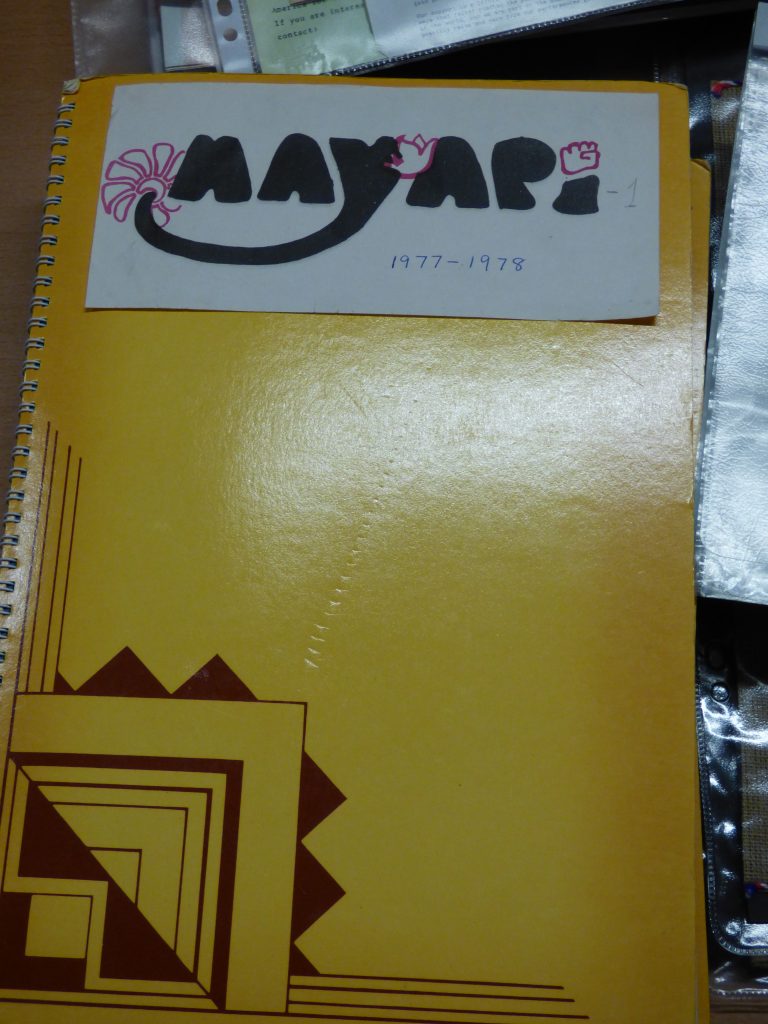
In collaboration with Chilean community colleagues, and as a part of our Documenting Chile initiative with the Refugee Council Archive at the University of East London and the Living Refugee Archive, we are honoured to have recently received the Mayapi Archive, which documents the history of the Mayapi Folk Music and Dance Group.
Our engagement work with the Chilean diaspora community in London dates from 2017 with initial conversations about hosting the Crafting Resistance: the art of Chilean political prisoners in-person exhibition at the Refugee Council Archive and also hosting a launch event and a series of craft-based workshops. Crafting Resistance as an exhibition challenged the idea of Chilean political prisoners as ‘passive victims’ following the 1973 military coup in Chile and which also failed to recognise the degree of agency many prisoners retain despite the horrific circumstances they endure. The Crafting Resistance exhibition brought together a curated collection of hand-made artefacts made by Chilean political prisoners whilst they were held in the concentration camps in Chile established by General Augusto Pinochet’s military regime following the 11 September, 1973 coup d’état. In a number of these camps, prisoners organised themselves and crafted items from the very limited materials and improvised tools available to them. The exhibition highlighted the importance of material culture as cultural heritage and reflected on these artefacts for their importance in relation to sustaining the mental health and wellbeing of those incarcerated.
These artefacts are now testimony to the mental endurance of all those who were political prisoners under the Pinochet regime. (Gloria Miqueles quoted in Dudman, 2021).
Documenting Chile
It was felt by all after the Crafting Resistance exhibition that this shouldn’t be the end for this collaboration, as the events had been very well received and it felt like only the start of something that could, and should, be continued as a participatory collaborative project between the Chilean diaspora community and the Living Refugee Archive / Refugee Council Archive. Early in 2021 we were approached by the organising committee of the IASFM18 virtual conference to be hosted by the University of Ghana to see if we wanted to contribute a virtual exhibition showcasing our work with the Living Refugee Archive. Revisiting the Crafting Resistance exhibition immediately sprang to mind as an opportunity to represent the original physical exhibition in a virtual space, as we had fortunately organised for a photographer, Juan Vera, to take photographs of the artefacts in the exhibition. After obtaining consent from Juan Cava and Chilean community representatives, we set to work curating the online exhibition which became the Crafting Resistance: The Art of Chilean Political Prisoners Virtual Exhibition. In discussions with Chilean colleagues when preparing this virtual exhibition, the idea for launching our Documenting Chile project was born out of a realisation that on the one hand, archival records of the Chilean diaspora in the United Kingdom are scattered across many different archival repositories, without any overall understanding of what has been documented; alongside a concern that active contemporary collecting amongst Chilean diaspora communities to help ensure the experiences of Chileans following the military coup and their subsequent exile in the UK were not lost to history.
The Documenting Chile project therefore became a call-out for a collaborative, participatory project with the aim of connecting:
“with individuals and organisations who may have either documents or objects from on the situation in Chile from the 1970’s through to the present that might help to preserve the collective memory and lived experience of the Chilean diaspora, ensuring your voices and stories are both heard and are also told in a way that you want you stories to be told.” (Dudman, 2021).
Mayapi
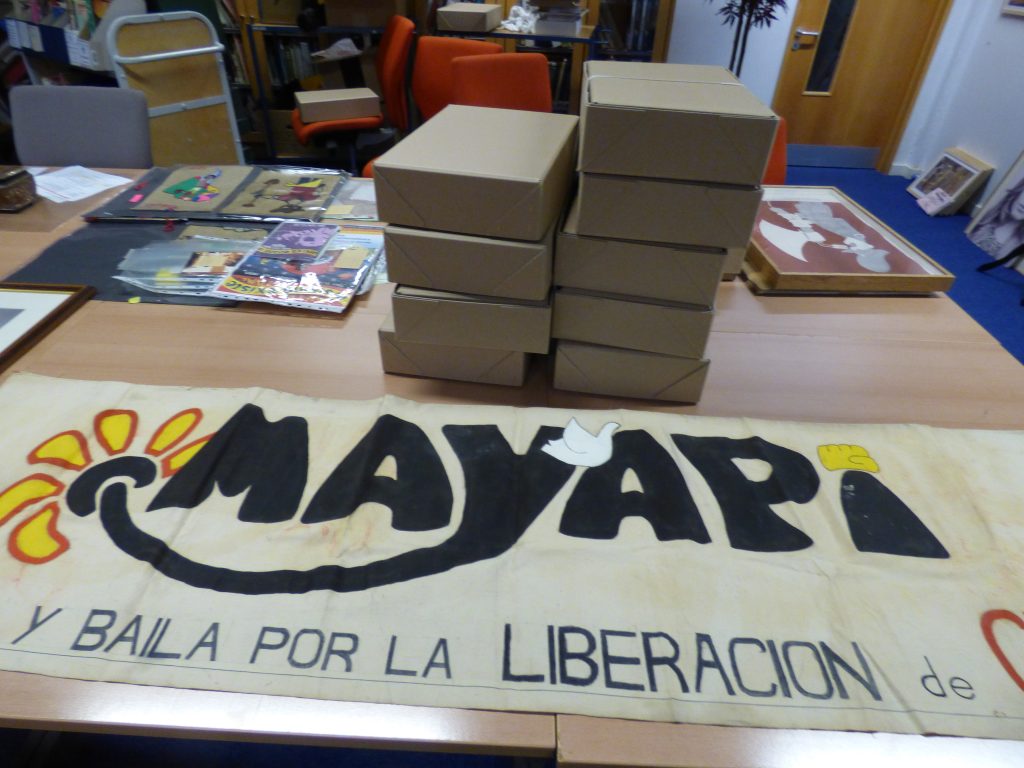
The Mayapi Archive was deposited with us at the Refugee Council Archive as part of our engagement work with the Documenting Chile project. Mayapi were a folk music group established in London in 1976 by a group of exiled Chileans living in the city alongside British musicians and a Mexican dancer. The name Mayapi was chosen by the group as it is the word for `unity’ in the indigenous Quechua language of the high Andes.
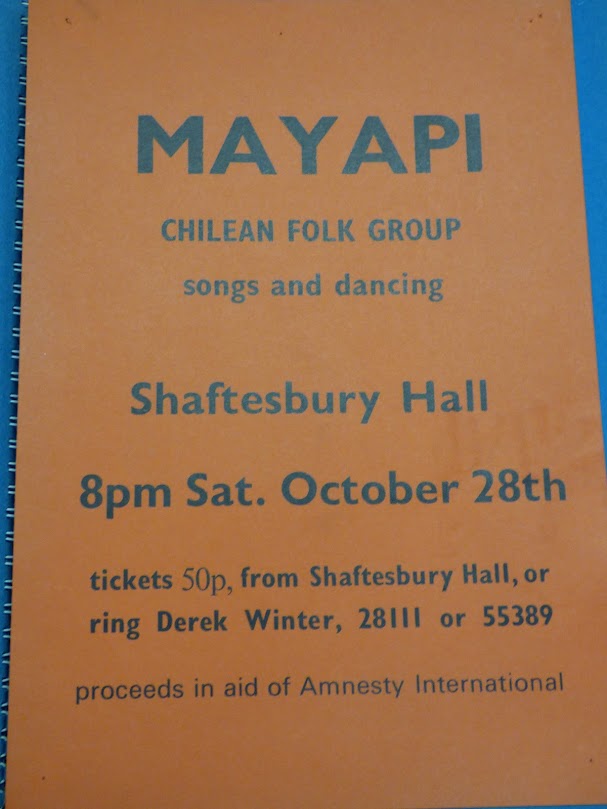
Mayapi were an amateur group and regularly performed in London and across South-East England. The group’s aim was to “keep alive the musical traditions of Chile in exile, and to present the problems and the current situation in Chile to the British people.” (Mayapi flyer for an event held in Cheltenham for the `One World Week’ festival, 22-29 October [no year]). Mayapi’s musical repertoire focused on both traditional Chilean musical heritage, augmented by the use of traditional musical instruments and costumes, alongside contemporary musical compositions, encompassing political and/or social messages.
Through their work, Mayapi, was involved in the Chile solidarity movement and often used their performances to help raise funds for organisations working in Chile, including Amnesty International and the Church in Chile. This included the Popular Dining-Rooms, which helped “to provide regular meals for the many children suffering from malnutrition [in Chile].” (Mayapi flyer for an event held in Cheltenham for the `One World Week’ festival, 22-29 October [no year]).
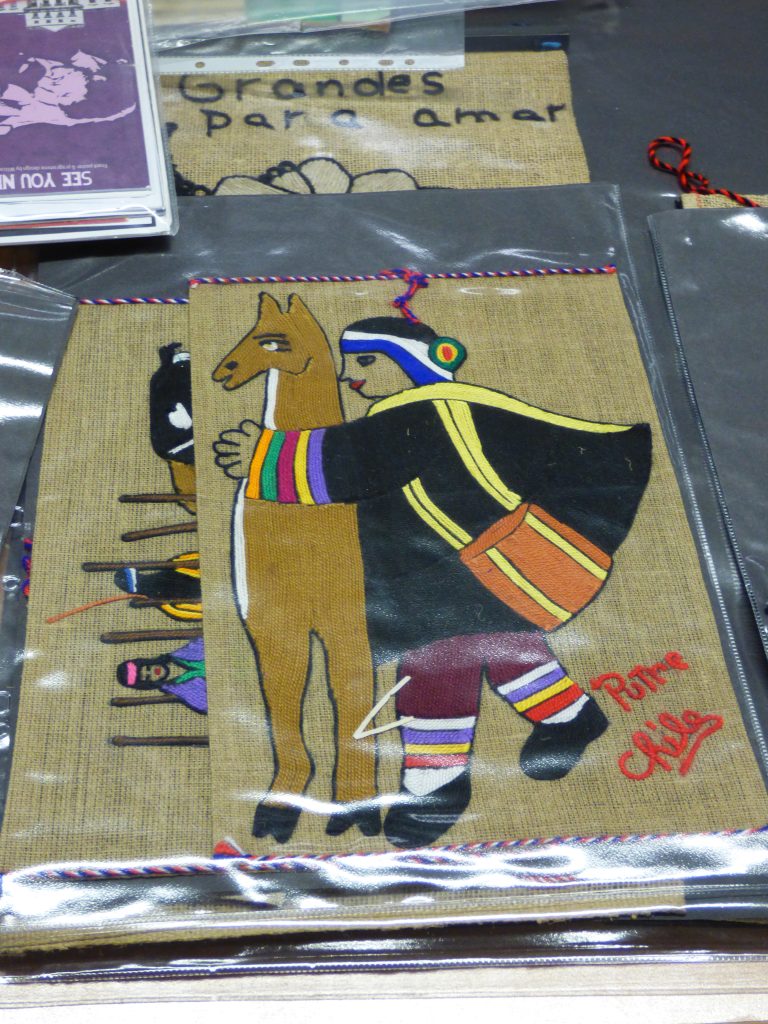
We would like to take this opportunity to thank Patricia Pons for the deposit of the Mayapi Archive and Gloria Miqueles for her ongoing community engagement and support of the Documenting Chile project. We are currently in the process of cataloguing and preserving the Mayapi archive so we can make it both secure and accessible for the future. The Archive itself contains Correspondence and other Paperwork; Cancioneros (Song Books); Lanigrafias (embroidery with wool that uses a variety of stitches to achieve a kind of needle painting); Press Cuttings and flyers; Photographs and Miscellaneous materials.
We will continue to update on our progress with the Mayapi Archive as work continues.